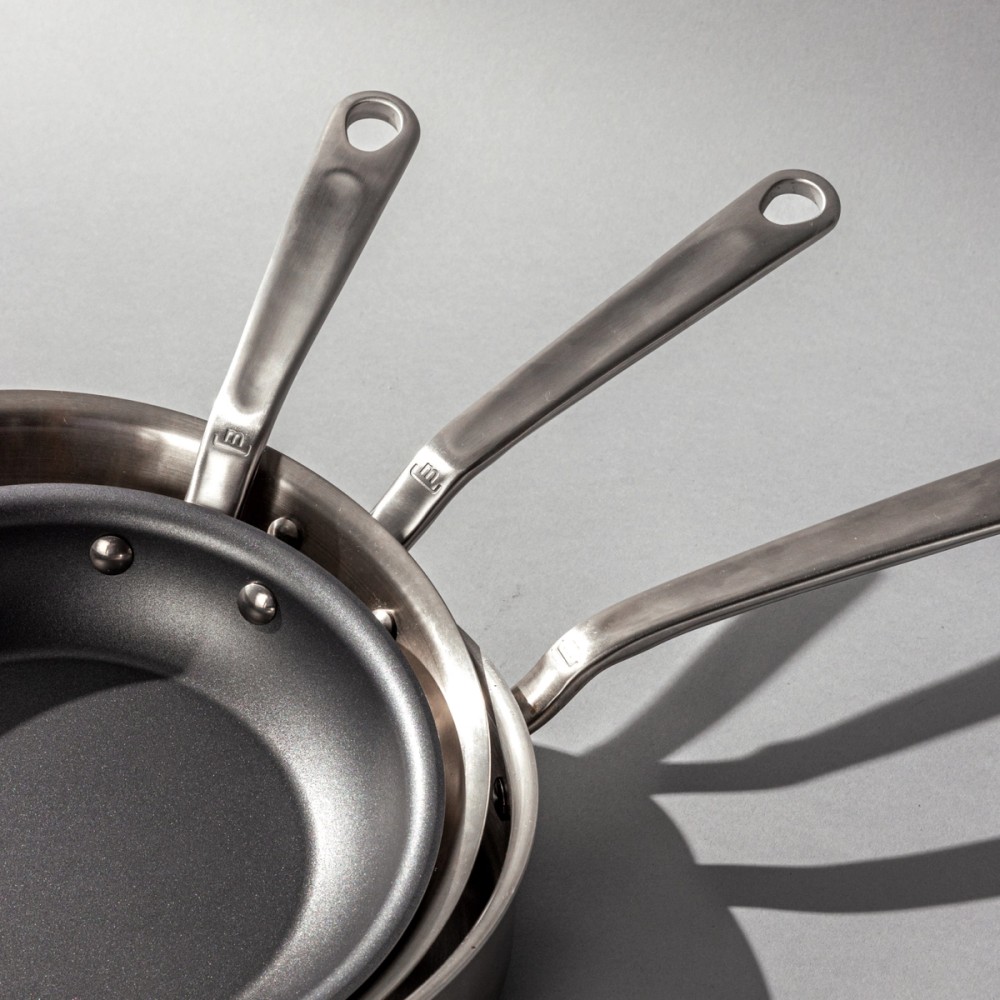
This All-Clad cookware review asks the question shoppers actually care about: is All-Clad non-toxic, and is the price worth it? The short version is that All-Clad's core lines are bare, fully-clad stainless steel with no coating to wear off or leach, which makes them among the most defensible non-toxic choices you can buy. This is a research-based review, not hands-on cooking. We synthesize the maker's published specs, material science, and aggregated verified-owner reviews, with every safety claim cited, and we flag the one caveat most brand pages gloss over: the separate nonstick line does use PTFE.

✓ Research-based rating, a commission never changes our verdict.
The verdict, in one line
All-Clad is our top coating-free pick because its stainless lines have no non-stick layer to degrade, no proprietary coating chemistry, and a lifespan measured in decades. The honest caveats are that bare stainless has a learning curve, new pans can shed trace nickel and chromium, and All-Clad also sells a separate PTFE nonstick line that is not part of what makes the stainless so defensible. If you want the safest long-term material and will learn to preheat, this is the set to beat.
All-Clad is fully-clad stainless steel cookware, bonded in branded layers and made in the USA.
All-Clad's reputation rests on fully-clad construction: instead of a thin aluminum disc stuck to the base, the conductive metal runs edge to edge through the whole pan. The three core collections are D3 (tri-ply, the classic three-layer build), D5 (five-ply, with an extra stainless layer for more even, forgiving heat), and Copper Core (five-ply with a copper center for the fastest response). All three are the coating-free heart of the brand.
The layers matter for what touches your food. The cooking surface is 18/10 stainless steel, roughly 18 percent chromium and 10 percent nickel, chosen because it is hard and non-reactive. Inside sit one or more aluminum layers (or a copper core) for heat distribution, and the exterior is magnetic 18/0 stainless so the pans work on induction. Nothing here is a coating: it is solid metal, bonded under pressure.
That construction is the reason All-Clad shows up in almost every non-toxic conversation. There is no sprayed-on release layer to scratch, chip or wear away, so the surface you cook on in year fifteen is the same metal you cooked on in year one. The trade-off is that bare stainless is not naturally non-stick, so it rewards preheating and a little fat, and it costs considerably more than a coated set.
All-Clad at a glance
"Non-toxic" has no legal definition, so the honest way to answer is to look at the material rather than the marketing. All-Clad's stainless lines are bare 18/10 stainless steel with no non-stick coating, which means there is no PFAS, PFOA or PTFE on the cooking surface at all. The EPA describes PFAS as a family of thousands of "forever chemicals" used in many non-stick coatings; a pan with no coating simply does not carry that concern. The FDA also recognizes stainless steel as a safe food-contact material.
One point of intellectual honesty: unlike coated brands that lean on a third-party lab report to substantiate what is in a coating, All-Clad has no coating to test, so the case rests on the inertness of the metal rather than on a lab report versus a marketing claim. That distinction, a verified test versus a marketing phrase, matters far more for coated pans than for bare steel.
Two honest caveats keep us from calling any pan a guaranteed "safe" choice. First, new stainless can release trace nickel and chromium, especially when you simmer acidic foods like tomato sauce for a long time in a brand-new pan; peer-reviewed leaching studies show the amounts are small and tend to fall as the pan ages, but people with a diagnosed nickel sensitivity should know stainless is not nickel-free. Second, Proposition 65 is about lead and cadmium, which are relevant to enamel and decorated glass rather than to bare stainless, so it is not the main issue here. For broader background on this chemical family, the NIEHS maintains a plain-language overview.
Bare stainless steel: what it is & what it isn't
Informational only, not medical advice. We describe what the maker and regulators disclose, we do not diagnose or make safety guarantees.
See today's All-Clad price
Coating-free, made-in-USA stainless · a commission never changes our verdict
This is the point most brand-friendly reviews blur. Alongside the bare stainless, All-Clad sells a nonstick range (marketed under names like HA1 and the nonstick versions of its clad lines) that uses a conventional PTFE coating. PTFE is a fluoropolymer in the EPA PFAS family, and while the FDA permits it for food contact and it is generally considered stable at normal cooking temperatures, it is a coating that wears over time and is not what makes All-Clad defensible.
So the correct answer to "does All-Clad have PFAS" is: the stainless lines do not, the nonstick line does. If your reason for buying All-Clad is to avoid coatings entirely, buy a stainless collection (D3, D5 or Copper Core) and skip the nonstick pieces. If you want one nonstick pan for eggs, treat it the way you would any PTFE pan: keep the heat moderate, avoid metal utensils, and never preheat it empty.
Because 18/10 stainless contains nickel, the fair question is whether meaningful amounts end up in food. Published metal-leaching research consistently finds that migration is small, is highest with long, acidic cooking in a brand-new pan, and drops sharply after the first several uses as the passive chromium-oxide layer stabilizes. For most people this is not a practical concern, which is why regulators treat stainless as a standard food-contact metal.
The exception worth naming is a diagnosed nickel allergy or sensitivity. If that describes you, no stainless pan is truly nickel-free, and coating-free alternatives like well-seasoned cast iron or 100 percent ceramic may suit you better. For everyone else, the practical takeaway is simple: give a new All-Clad pan a few normal cooking cycles, avoid storing acidic leftovers in it, and the trace-metal question largely takes care of itself.
On paper the specs are strong. The stainless lines are oven-safe to about 600°F, which comfortably covers searing then finishing in the oven, and the magnetic 18/0 exterior makes them induction-compatible along with every other stovetop. There is no coating temperature ceiling to worry about, so high-heat searing, which would eventually damage a ceramic or PTFE surface, is exactly what bare stainless is built for. Bare steel also has no coating to overheat, so it does not produce the fumes that scorching an empty PTFE pan can.
The catch is technique, not safety. Bare stainless sticks if you rush it, so the maker and experienced owners recommend preheating the pan, adding fat, and letting proteins release naturally before flipping. Most pieces are dishwasher-safe, though hand-washing keeps the exterior brighter, and a little barkeeper's-friend style polish removes the discoloration that acidic foods can leave. None of that affects whether the pan is non-toxic; it affects how pleasant it is to live with.
Aggregated verified-owner reviews are consistent and, unusually, line up with the material science. Owners praise the even heating, the oven-to-table durability, and pans that still perform after many years of daily use. The most common complaint is the learning curve: people who expect non-stick behavior from bare metal report sticking until they adjust their heat and fat. A smaller group dislikes the D3 handle shape, which is a comfort preference rather than a safety issue.
On longevity the sentiment is emphatic. It is common to read from long-term owners that a pan bought a decade or more ago is still in rotation, which is the practical payoff of a coating-free design: there is no release layer to fail, so the failure mode that ends most cookware simply does not apply here.
All-Clad sits at the top of the price ladder, and we describe price only in tiers, not dollars: this is a $$$$ purchase. What you get for it is a limited lifetime warranty, US manufacturing in Canonsburg, Pennsylvania, and a material that does not wear out. Spread across the decades a stainless set can last, the cost-per-year can undercut a coated set you replace every few years.
Value, then, depends on your horizon. If you want the cheapest pan today, All-Clad is not it, and a tri-ply set from a value-focused maker delivers most of the performance for less. If you want the most defensible non-toxic material with the longest life, the premium buys something real. Watch for open-stock pieces and set discounts rather than paying full retail for a large boxed set.
A few terms cut through most cookware confusion. 18/10 and 18/0 describe the chromium and nickel content of stainless; 18/10 is the food-contact interior, 18/0 the magnetic exterior. Fully-clad means the conductive core runs through the entire pan, not just a disc on the base. PFAS is the EPA umbrella for thousands of fluorinated compounds, and PTFE (the classic non-stick fluoropolymer) is one of them. Sol-gel ceramic is a different, silica-derived coating used by ceramic non-stick brands.
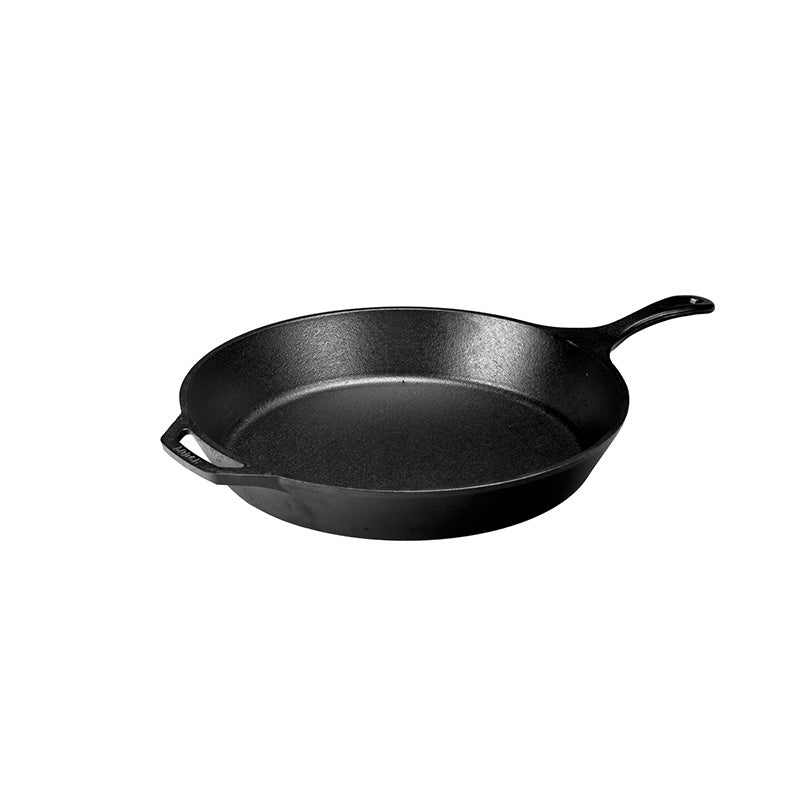
Two more worth knowing: enameled cast iron uses a glass (vitreous enamel) coating where Proposition 65 lead and cadmium checks matter, and seasoned cast iron relies on polymerized oil rather than any synthetic coating. All-Clad's stainless lines sit in the coating-free camp with bare cast iron, which is why they share that camp's core advantage: nothing to wear off.
This review is research synthesis, not a cooking diary. We compared All-Clad's published specifications, material-science literature on stainless steel and metal migration, regulatory guidance from the FDA and EPA, and aggregated verified-owner reviews. We did not sear, simmer or run our own lab tests, and we say so plainly so you can weight the evidence yourself.
What we cannot verify without hands-on testing is also worth stating: exact nickel-migration figures for a specific pan and recipe, real-world induction response versus a competitor, and long-term handle comfort are all things owner reports describe better than a spec sheet can. Where the evidence is thin we hedge rather than guess, and we update the page when the maker changes materials or new testing publishes.
All-Clad is the premium end of coating-free stainless. If the price gives you pause, two coating-free alternatives cover the same non-toxic logic at a lower entry point:
The questions shoppers ask most, with hedged, cited answers.
Every safety statement in this review links to a primary or authoritative source:
Informational only, not medical advice. This review translates what the maker and regulators report. It does not diagnose, treat, or guarantee safety. Consult a qualified professional for medical guidance.
All-Clad's stainless lines are the coating-free, buy-it-for-life pick, worth the premium if you value the material and will learn to preheat. Want a lower entry price on the same logic? Compare the coating-free field.