The safest cookware isn't a brand, it's a material and a coating. We compare stainless, cast iron, carbon steel, 100% ceramic and coated non-stick against published evidence, and explain what "non-toxic," "PFAS-free" and "food-grade" really guarantee.

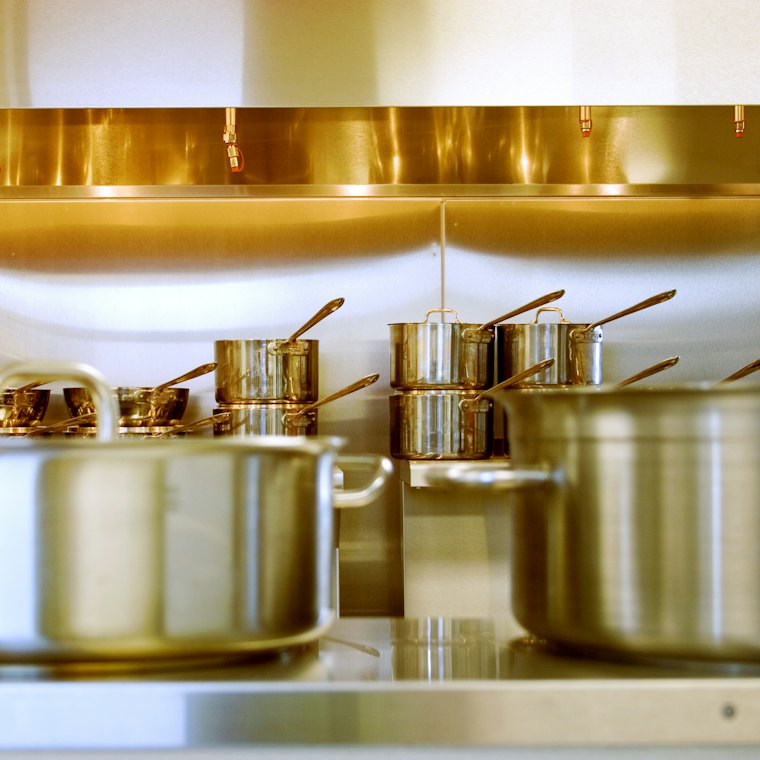
Fully-clad · non-reactive

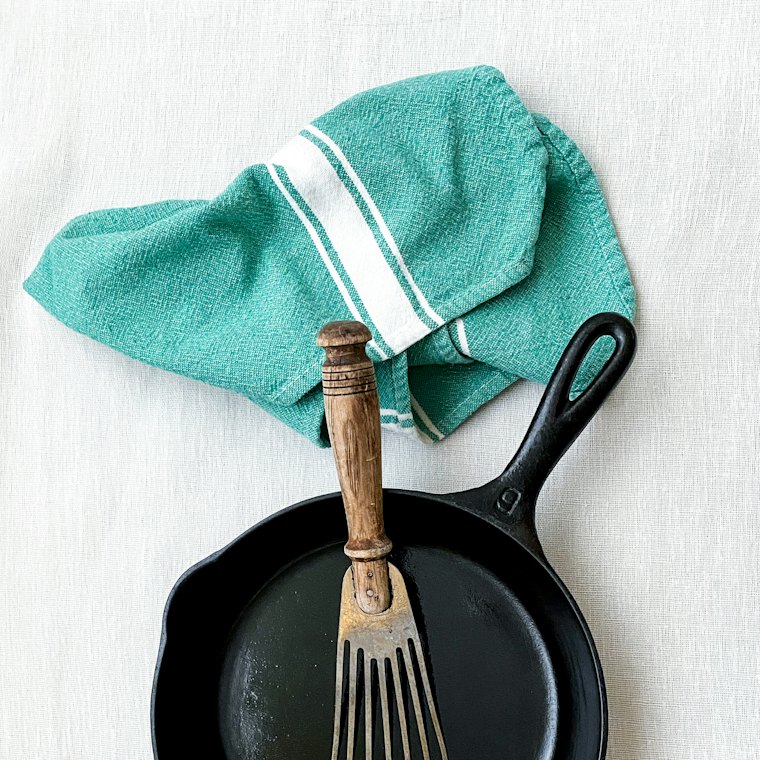
Seasoned · adds iron

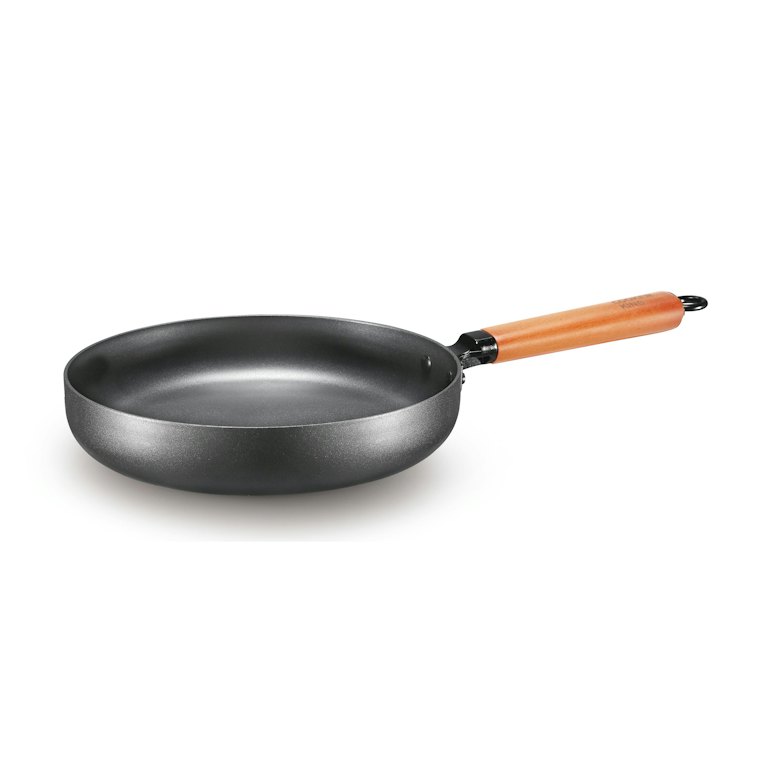
Chef's coating-free non-stick

Sol-gel · wears ~1-3 yrs

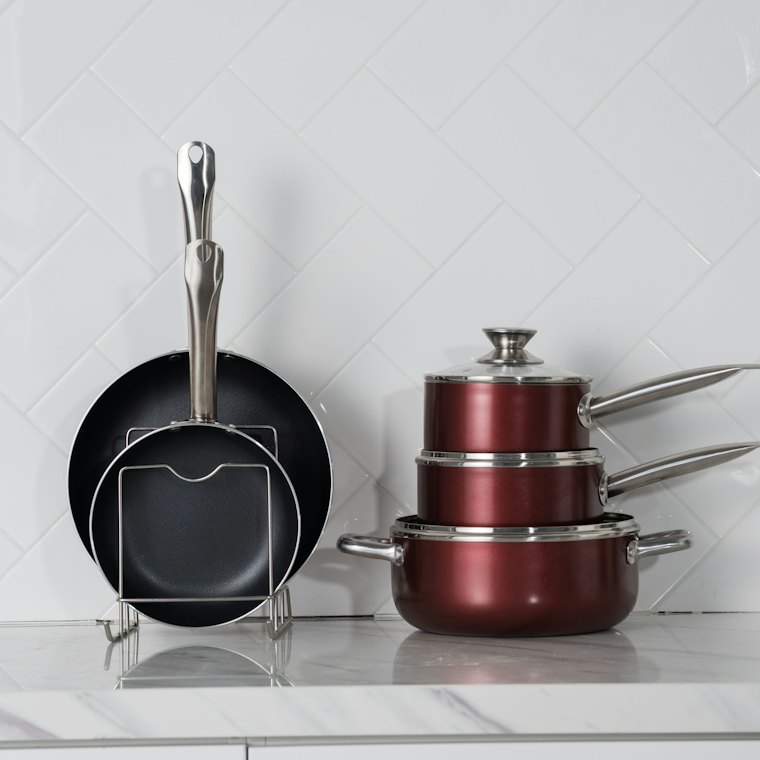
PTFE · PFAS family
Strip away the marketing and "non-toxic cookware" becomes a single question: is there a coating between your food and the pan, and what is its chemistry? Here's the whole category on one line.
Stainless steel, cast iron, carbon steel and 100% ceramic have no non-stick layer to wear or leach. The open questions are narrow, trace metals, upkeep, not fluorochemistry.
Marketed PFAS-free and generally accepted as such, but the non-stick surface typically degrades over roughly 1 to 3 years. Different from kiln-fired 100% ceramic, the labels blur the two.
Conventional non-stick is a fluoropolymer in the PFAS family. FDA-permitted for food contact; documented concerns are overheating fumes and coating wear. "PFOA-free" ≠ "PFAS-free."
You don't have to read the whole hub. Our roundup ranks every top set by disclosed chemistry and third-party certification, with current prices, so you can choose in minutes.
"Non-toxic cookware" is one of the most-searched phrases in the kitchen, and one of the least defined.
There is no legal or regulated standard behind the word "non-toxic," so on a label it tells you almost nothing on its own. What actually matters is the material and its coating: whether a pan relies on a PFAS/PTFE non-stick surface, a sol-gel ceramic coating, or a bare material such as stainless steel, cast iron, carbon steel or 100% ceramic. This hub ignores the marketing term and reads the chemistry instead, then links to the individual guides and brand reviews beneath it.
The same is true of the adjacent claims. "PFAS-free" and "PFOA-free" are not the same statement: PFOA is a single compound largely phased out of U.S. cookware years ago, while PFAS is a family of thousands of substances, as the EPA describes it. "Food-grade" and "BPA-free" are similarly unregulated. Our job is to explain what each term does and doesn't guarantee, and to attach every safety statement to an authoritative source rather than to our own opinion.
Before any brand comparison, understand the surface touching your food. Everything else is a detail on top of this.
PTFE (the material behind Teflon) is a fluoropolymer in the PFAS family. The FDA permits it for food contact; the documented concerns are fume release when overheated past ~500°F/260°C and gradual coating wear.
See what-is-pfas →A silica-based non-stick layer marketed as PFAS-free. Widely used and generally accepted as fluorine-free, but it is still a coating, performance typically fades over ~1 to 3 years, and it is not the same as solid ceramic.
Is ceramic safe? →Stainless steel, cast iron, carbon steel and 100% kiln-fired ceramic have no non-stick coating to fail. The remaining questions are narrower and better quantified, trace metals and glazes, and we cover them below.
Compare materials →Ranked by disclosed chemistry and third-party certification, and plain about where the evidence runs out.

No coating. Non-reactive. Minor nickel note.

Coating-free, seasoned. Adds dietary iron.

Kiln-fired, inert, distinct from coated.

The chef's coating-free non-stick.

Easy release; coating wears ~1-3 yrs.

PFAS family; fumes if overheated.
| Material | Coating | PFAS | Heavy-metal note | Oven / induction | Lifespan | Best for | Our picks |
|---|---|---|---|---|---|---|---|
| Stainless steel | None | None | Trace nickel/chromium (new, acidic foods) | High · yes (magnetic) | Decades | Everyday, searing | See picks → |
| Cast iron | None | None | Adds dietary iron | Very high · yes | Generational | Heat retention, searing | See picks → |
| Carbon steel | None | None | Adds dietary iron | Very high · yes | Generational | Chef-style non-stick | See picks → |
| 100% ceramic | None | None | Inert with an unleaded glaze | High · varies | Years (brittle) | Non-reactive cooking | See picks → |
| Ceramic-coated | Sol-gel | Claimed free | Verify glaze/base source | Moderate · often | ~1-3 yrs | Easy release, low-fat | See picks → |
| Traditional non-stick | PTFE | PFAS family | , | Low · often | ~3–5 yrs | Delicate foods, eggs | PFAS-free swaps → |
Illustrative summary for layout review · each figure is cited on the full cookware guide and the per-material guides below.
Each guide opens with an at-a-glance comparison and ranks by published evidence and third-party certification, not by brand marketing.
Full-kitchen sets and open stock, compared across ceramic, stainless, cast iron & carbon steel.
See the 9 picks →Sol-gel coated vs. 100% ceramic, and how long each coating really lasts.
See ceramic picks →Fully-clad, no coating to fail, with the nickel-leaching question explained.
See stainless picks →Bare and enameled, with a lead/cadmium note on cheap imported enamels.
See cast iron picks →Coating-free carbon steel, 100% ceramic and multi-ply stainless woks, compared.
See wok picks →The restaurant coating-free alternative to non-stick, once seasoned.
See carbon steel picks →Single pans that skip the PFAS family, ceramic and enameled options.
See PFAS-free picks →Each review synthesises manufacturer specs, any published third-party lab report, and aggregated verified-owner reviews, with claims separated from evidence.
Fully-clad stainless, coating-free construction, warranty and the nickel question.
Stainless, carbon steel & enamel, how the range compares on disclosed materials.
Enameled cast iron, enamel composition and heavy-metal disclosure, examined.
Bare and enameled cast iron, the low-cost, coating-free workhorse.
Neutral, evidence-based match-ups for the decision you're actually making.
We don't run a test kitchen or a lab. Every cookware guide is built the same transparent way, and we say plainly what the evidence can't yet settle.
We start from manufacturer specifications, published third-party lab reports and certifications (NSF/ANSI, Prop 65), not the marketing page.
Every health or safety statement links to an authoritative source: the EPA, FDA, California Prop 65, NIH, or peer-reviewed research.
Products are ranked on disclosed chemistry, lab-report status and aggregated verified-owner reviews, and we flag what remains uncertain.
The questions we get most, with hedged, cited answers, and links to the full guide.
Every safety statement on this hub and its child guides links to a primary or authoritative source. The bodies we rely on most for cookware:
Informational only, not medical advice. This hub translates what regulators and peer-reviewed research report; it does not diagnose, treat, or make safety guarantees. Consult a qualified professional for medical guidance.