NTKCEST · 2026
The 2026 Roundup · 5 picks · coating-free carbon steel

Best Carbon Steel
Pans of 2026

The best carbon steel pan wins on one fact: it has no coating, so there is nothing between your food and the metal to wear off or leach. "Non-toxic" is not a regulated term, so we ignore the label and read the material. Carbon steel seasons to a naturally slick, coating-free surface, which is why we rank it, like cast iron, among the most defensible non-toxic pans, then sort our picks by build, weight and value.

EPA·FDA·NIH·Prop 65·Every claim cited
SWritten by Skyler, Founder & Editor · Last updated Sep 2026
5carbon steel pans researched
5authoritative sources cited
100%coating-free picks
$–$$$every budget covered

Key Takeaways

  • With a carbon steel pan, the metal is the easy part. The label is where the confusion lives, so we read the material instead.
  • Our top pick is Made In Carbon Steel: Restaurant-grade carbon steel that seasons to a slick, coating-free surface and takes very high heat.
  • Fewest open questions
  • Non-Toxic Kitchen Co. ranks every carbon steel pan by material science and disclosed evidence, not marketing claims, with each safety point cited. Compare safer picks in our guide.
Disclosure: Some links are affiliate links. If you buy through one we may earn a commission at no extra cost to you, and it never changes our evidence-based rankings. Full affiliate disclosure →

01What the Best Carbon Steel Pan Actually Means by "Non-Toxic"

With a carbon steel pan, the metal is the easy part. The label is where the confusion lives, so we read the material instead.

The best carbon steel pan earns that title for one simple reason: there is no coating between your food and the metal, so there is nothing proprietary to wear off or leach. "Non-toxic" is not a regulated term, so on a box it certifies nothing. What matters is the material, and carbon steel is a coating-free alloy of iron and a little carbon that seasons into a naturally slick patina. That is why we treat it, alongside cast iron, as one of the most defensible non-toxic surfaces you can cook on.

The chemical most shoppers want to avoid in cookware is PFAS, the family of forever chemicals that includes PTFE (Teflon) and, historically, PFOA. The EPA describes PFAS as thousands of related compounds, which is why "PFOA-free" and "PFAS-free" are not the same claim. A carbon steel pan sidesteps that entire debate because it carries no fluoropolymer coating at all, and the FDA treats bare steel and polymerized seasoning as stable food-contact materials.

Two honest caveats belong up front. Carbon steel is reactive with acidic foods, so long tomato or wine simmers can strip a young patina and pick up a metallic taste, and it must be seasoned and kept dry to avoid rust. Seasoning itself is just oil polymerized onto the metal, and you control which oil you use, commonly flaxseed or grapeseed. For strict shoppers that control is a feature, not a chore. Every pick below is coating-free, induction-compatible where noted, and built for high-heat searing.

02 · METHOD

How we researched
and vetted these picks

We do not run a test kitchen or a lab. Rankings are a transparent synthesis of what makers disclose and what regulators say, and we flag what the evidence cannot settle.

01

Read the disclosures

We start from manufacturer specifications, published third-party lab reports and certifications, not the marketing page.

02

Cite the science

Every health or safety statement links to the EPA, FDA, Prop 65, NIH or peer-reviewed research.

03

Rank by evidence

Picks are ranked on disclosed chemistry, third-party grade and aggregated verified-owner reviews, never on hands-on cooking or our own lab tests, which we do not do.

03 · AT A GLANCE

All 5 picks compared
by steel type, coating and induction fit

Ranked by disclosed chemistry and certification. Price tiers are relative; live prices load per pick.

PanSteel & buildCoatingPFAS-freeInductionPriceCheck price
Made InCarbon steel (pro-grade)NoneInherentYes$$View →
De BuyerCarbon steel (beeswax)NoneInherentYes$$View →
SmitheyCarbon steel (smooth-milled)NoneInherentYes$$$View →
AlvaCarbon steel (pre-seasoned)NoneInherentYes$$View →
OXO ObsidianCarbon steel (pre-seasoned)NoneInherentYes$$View →

Summary for comparison, disclosures and prices are cited and loaded per product on the final build.

THE PICKS · RANKED

Coating-free carbon steel,
ranked by evidence

Every pan here is coating-free, so we rank by build quality, seasoning, weight and value rather than by any coating claim. There is no coated option to relegate, because carbon steel does its non-stick job without one.

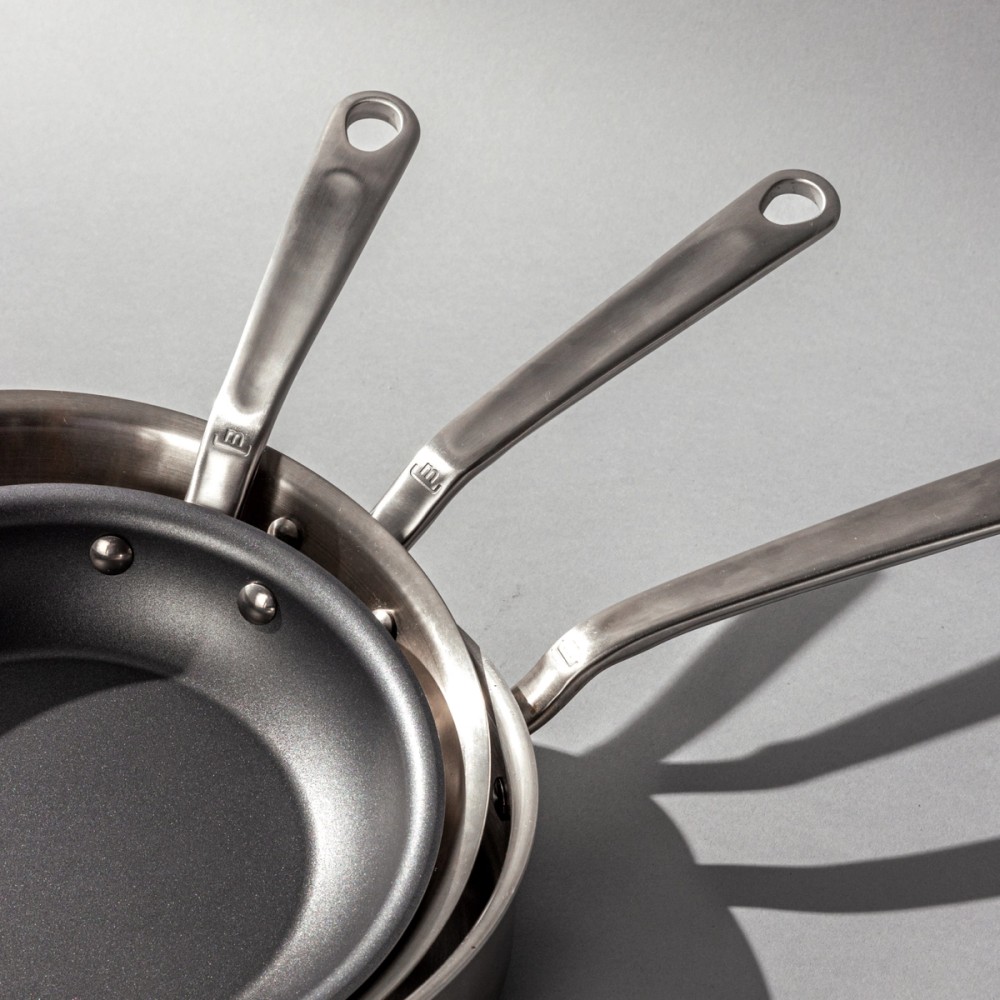
Made In Carbon Steel best carbon steel pan★ Best overall1

Made In Carbon Steel

Best overall · pro-grade coating-free steel

Restaurant-grade carbon steel that seasons to a slick, coating-free surface and takes very high heat.

Best for: everyday searing and a first coating-free non-stick pan

Made In sells a blue carbon steel line built to the standard used in professional kitchens, which is a useful real-world durability signal. It is an alloy of roughly 99% iron and 1% carbon, so it is coating-free by definition: no fluoropolymer, no glaze, nothing proprietary between food and metal. Seasoned properly it becomes genuinely non-stick, and it moves from stovetop to a hot oven without the temperature ceiling a coated pan has.

It ships with a protective wax or oil film you wash off before seasoning, and the manufacturer states it is induction-compatible. Expect the usual carbon steel routine: season it, hand-wash it, dry it, and avoid long acidic simmers until the patina is well established. Because you build the seasoning yourself, you decide exactly which oil touches the surface.

Carbon steelNo coatingPFAS-free by designOven & inductionSeasons non-stick

Strengths

  • +Coating-free, seasons to non-stick
  • +Pro-grade build, oven and induction
  • +You choose the seasoning oil

Trade-offs

  • –Needs seasoning and hand-washing
  • –Reactive with acidic foods
  • –Not dishwasher safe
Typical price$$

✓ Ranked first on coating-free chemistry, a commission never changes our pick.

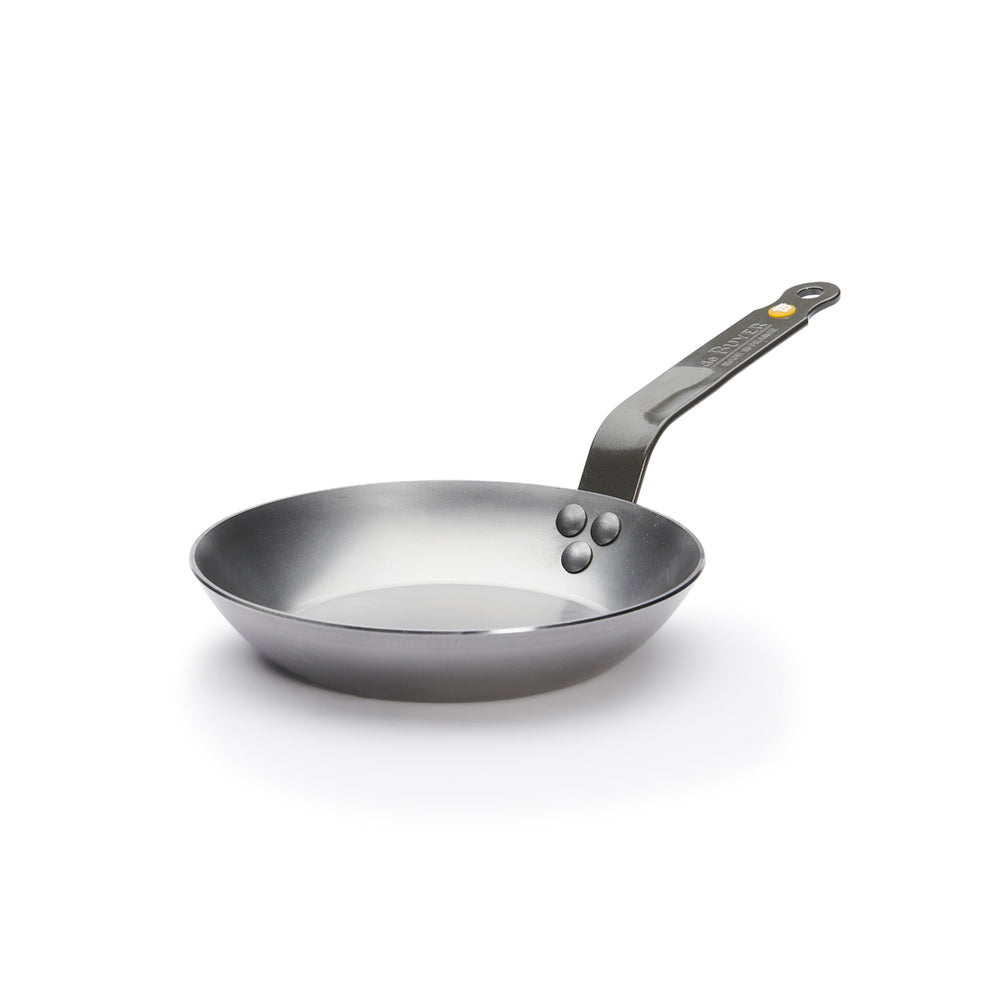
De Buyer Mineral B best carbon steel panBest French classic2

De Buyer Mineral B

Best French classic · beeswax-finished carbon steel

The chef-shop standard, a heavy French carbon steel pan that seasons to a durable patina.

Best for: high-heat cooking and buy-it-once value

The Mineral B line from De Buyer is the reference French carbon steel pan, finished at the factory with a food-safe beeswax film you wash off before you season it yourself. It is coating-free, so like all carbon steel it carries no PFAS or PTFE concern, and the FDA treats the polymerized seasoning as a stable food-contact surface.

It is heavier than the Made In pan and has a longer break-in, but many cooks consider that heft an advantage for heat retention and searing. The same care rules apply: season with an oil you choose, keep it dry, and treat acidic dishes gently until the patina matures. With basic upkeep it can last for decades.

Carbon steelBeeswax finishNo coatingVery high heatSeasons non-stick

Strengths

  • +Heavy, excellent heat retention
  • +Coating-free French classic
  • +Buy-it-once longevity

Trade-offs

  • –Heavier, longer break-in
  • –Reactive with acid when young
  • –Hand-wash only
Typical price$$

✓ Independent pick, we may earn a commission, never at extra cost to you.

Best heirloom3

Smithey

Best heirloom · smooth-milled American carbon steel

A polished, smooth-surfaced carbon steel pan made in the USA, built to be handed down.

Best for: buyers who want a smoother surface and domestic manufacturing

Smithey machines its carbon steel to a smooth interior rather than leaving the pebbled texture of some mass-market pans, which many users report makes seasoning easier and release quicker. It is made in the United States, and like every pan here it is coating-free, so there is no synthetic non-stick layer to scratch, flake or wear out.

The trade-off is price: heirloom, domestically made carbon steel costs more than an imported pan of similar size. The manufacturer states its pans arrive with an initial seasoning, though building up your own layers over time is what makes any carbon steel pan slick. If you want a pan you can genuinely pass on, the polish and construction justify the premium for many households.

Carbon steelSmooth-milledMade in USANo coatingRe-seasonable

Strengths

  • +Smooth surface, easy release
  • +US-made, heirloom build
  • +No coating to wear out

Trade-offs

  • –Premium price
  • –Still needs seasoning
  • –Heavier than thin pans
Typical price$$$

✓ Ranked on coating-free chemistry and disclosed build, not brand shine.

Best pre-seasoned4

Alva Artist

Best pre-seasoned · ready to cook sooner

A carbon steel pan that arrives with a factory seasoning, shortening the break-in.

Best for: shoppers who want less setup before the first cook

Alva markets its carbon steel pans as pre-seasoned, meaning the factory has already polymerized an initial oil layer so the pan is closer to non-stick out of the box. It is still bare carbon steel underneath, coating-free and free of any fluoropolymer, so the seasoning is polymerized oil rather than a synthetic layer.

Pre-seasoning shortens the wait, but strict shoppers should note you do not choose the factory oil. If that matters to you, you can strip and re-season with your own flaxseed or grapeseed oil. Otherwise it behaves like any carbon steel pan: keep it dry, hand-wash, and go easy on acidic foods until the patina builds.

Carbon steelPre-seasonedNo coatingFaster break-inRe-seasonable

Strengths

  • +Closer to non-stick out of box
  • +Coating-free carbon steel
  • +Lower setup effort

Trade-offs

  • –You do not pick the factory oil
  • –Still reactive with acid
  • –Seasoning improves with use
Typical price$$

✓ Ranked on coating-free chemistry, with the factory-oil caveat noted.

Not sure carbon steel is right for you?

Our cookware hub compares carbon steel with cast iron, stainless and ceramic in plain English, then points you to the right guide.

Compare cookware materials →
Best everyday value5

OXO Obsidian

Best everyday value · pre-seasoned carbon steel

A pre-seasoned everyday carbon steel pan aimed at newcomers to the material.

Best for: everyday cooking and easing into carbon steel

The OXO Obsidian line is carbon steel that arrives pre-seasoned, positioned as an approachable option for people moving away from coated non-stick. Like every pan on this list it is coating-free, so the non-stick behavior comes from polymerized seasoning rather than a fluoropolymer surface.

It is a practical everyday choice: lighter and less expensive than the heirloom pans, with a factory seasoning to get you started. As with any pre-seasoned pan you do not choose the initial oil, and the patina still improves as you cook. Keep it dry and hand-wash it to protect the seasoning.

Carbon steelPre-seasonedNo coatingEveryday weightSeasons non-stick

Strengths

  • +Approachable for beginners
  • +Coating-free, pre-seasoned
  • +Reasonable price

Trade-offs

  • –Factory oil not your choice
  • –Reactive with acid early
  • –Seasoning needs upkeep
Typical price$$

✓ Ranked on coating-free chemistry, an easy on-ramp to carbon steel.

04Chemicals and coatings to avoid in carbon steel pans

What to screen out

Steer clear of any "carbon steel" pan sold with a PTFE or other non-stick coating layered on top, which reintroduces the PFAS family the material naturally avoids. The EPA notes that "PFOA-free" does not mean "PFAS-free." Watch for cheap enameled or painted handles where lead or cadmium can appear, a concern regulated in California under Proposition 65, and skip pans that will not disclose their finish. When a maker will not say what is on the metal, treat the chemistry as unknown.

05The safest materials, by current evidence

Fewest open questions

Bare carbon steel seasoned with an oil you choose carries the least uncertainty in this category: it is just iron, carbon and polymerized oil, with no coating to wear or leach. The FDA treats steel and polymerized seasoning as stable food-contact materials. Cast iron is its closest coating-free cousin, heavier and slower to heat but equally free of synthetic non-stick.

06How to choose the best carbon steel pan

  • 1Confirm it is truly coating-free. Real carbon steel has no non-stick layer. Its slickness comes from seasoning, so any pan advertising a separate non-stick coating is a different, coated product.
  • 2Pick your weight. Heavier French pans hold heat and sear well; lighter pans are easier to maneuver and faster to heat. Neither is safer, so choose for how you cook.
  • 3Plan to season it. Wash off the factory wax or oil, then build a patina with a thin, high-smoke-point oil such as grapeseed or flaxseed. Repeat until food releases cleanly.
  • 4Respect acidic foods. Carbon steel is reactive, so long tomato or wine simmers can strip a young patina. Use stainless or enameled cast iron for those dishes until the seasoning matures.
  • 5Check induction fit. Carbon steel is magnetic and works on induction. Confirm the base is flat if you cook on induction or a glass cooktop.
  • 6Keep it dry. Hand-wash, dry immediately and add a light oil film to prevent rust. A well-kept carbon steel pan can outlast every coated pan you would otherwise replace.

07What the evidence doesn't settle

Independent long-term data on exactly how much iron migrates from a seasoned carbon steel pan is limited, though what exists suggests small amounts that are generally considered safe for most people and can even add dietary iron. "Non-toxic" and "food-grade" remain unregulated marketing terms, so we rank by material, disclosed finish and aggregated owner reports rather than the label. We hedge where the science is thin and update as better evidence publishes.

FAQ

Frequently Asked Questions About Carbon Steel Pan

The questions shoppers ask most, with hedged, cited answers.

Is carbon steel cookware non-toxic?

Carbon steel is coating-free: an alloy of iron and carbon with a seasoned patina of polymerized oil, and no fluoropolymer surface. Because there is no coating to wear or leach, many consider it among the most defensible non-toxic pans. "Non-toxic" itself is an unregulated term, so we point to the material rather than the label.

Is carbon steel safe, and is it better than cast iron?

Both are coating-free and PFAS-free by nature. Carbon steel is lighter and heats faster, while cast iron holds heat longer for searing. Neither is clearly safer; the better choice depends on the weight and responsiveness you want.

Does carbon steel have PFAS or Teflon?

No. Bare carbon steel has no PTFE, PFOA or other PFAS coating. Its non-stick behavior comes from seasoning, not a synthetic layer. Only avoid pans that add a separate non-stick coating on top of the steel.

How do you season a carbon steel pan?

Wash off the factory wax or oil, dry it, then apply a very thin layer of a high-smoke-point oil such as grapeseed or flaxseed and heat until it polymerizes. Repeat several times to build a durable, slick patina.

Can you cook acidic foods in carbon steel?

Carbon steel is reactive, so long simmers of tomato, wine or vinegar can strip a young patina and add a metallic taste. A well-established seasoning tolerates brief acidic contact, but for long acidic cooking, stainless or enameled cast iron is a better fit.

Is carbon steel induction compatible?

Yes. Carbon steel is magnetic, so it works on induction as well as gas, electric and in the oven. Check that the base sits flat for the best contact on induction and glass cooktops.

Does carbon steel rust?

It can if left wet, because the bare metal is exposed. Hand-wash, dry it right away and wipe on a light oil film to protect the seasoning. Kept dry, it resists rust and lasts for decades.
S

Skyler, Founder & Editor

I started Non-Toxic Kitchen Co. to cut through vague "non-toxic" labels by organizing what authoritative sources actually say. These rankings are research syntheses of manufacturer specs, third-party lab reports and aggregated verified-owner reviews, not hands-on cooking or our own lab tests, and every safety claim is cited. Read our full methodology →

08Sources & further reading

Every safety statement on this page links to a primary or authoritative source. The bodies we rely on most:

Informational only, not medical advice. This guide translates what regulators and peer-reviewed research report. It does not diagnose, treat, or make safety guarantees. Consult a qualified professional for medical guidance.

Ready to go coating-free?

Start with our overall carbon steel pick for a coating-free surface that seasons to non-stick, or reach for the budget option and simply plan to build the patina yourself.

See the No. 1 carbon steel pan → Back to the cookware hub →