NTKCEST · 2026
The 2026 Roundup · 7 picks · sets & standout pieces

The Best Non-Toxic
Cookware Sets
of 2026

The best non-toxic cookware set comes down to one thing: the coating. "Non-toxic" isn't a regulated term, so we ignore the label and read the chemistry, and we rank coating-free materials first, because a coating (even a good one) is a wear item with proprietary chemistry. Stainless, cast iron and carbon steel lead; coated ceramic earns a place for convenience, ranked honestly.

EPA·FDA·NSF·Prop 65·Every claim cited
SWritten by Skyler, Founder & Editor · Last researched Sep 2026 · Last updated Sep 2026

Key Takeaways

  • The best non-toxic cookware is coating-free stainless steel, cast iron, carbon steel or 100% ceramic, chosen for inert food contact.
  • Every pick here is PFAS-free and lead-free, ranked by disclosed chemistry and third-party certification rather than brand marketing.
  • Ceramic-coated sets can be convenient, but the coating degrades over a few years, so we rank bare materials first.
  • Non-Toxic Kitchen Co. ranks the best non-toxic cookware by material science and cited evidence, not hype. Compare materials in our cookware hub.
9sets researched
100+specs & disclosures compared
6authoritative source bodies
$–$$$$every budget covered
Disclosure: Some links are affiliate links, including the Amazon Associates program. If you buy through one we may earn a commission at no extra cost to you, it never changes our evidence-based rankings. Full affiliate disclosure →

01What "non-toxic" really means for cookware

A non-toxic cookware set is not a certification you can buy, it's a decision about materials and coatings.

There is no legal or regulated definition of "non-toxic," so on a box it tells you almost nothing. What actually matters is what sits between your food and the metal. In cookware the concern most shoppers are trying to avoid is PFAS, the "forever chemicals," including PTFE (Teflon) and, historically, PFOA. The EPA describes PFAS as a family of thousands of compounds, which is exactly why "PFOA-free" and "PFAS-free" are not the same claim.

The other questions are narrower and better quantified: lead and cadmium can appear in some imported enamels and glazes (regulated in California under Proposition 65), and trace nickel and chromium can migrate from new stainless steel. Our job on this page is to explain what each unregulated term does and doesn't guarantee, then rank real products by what their makers actually disclose, with every safety statement linked to an authoritative source.

This roundup covers both full sets and the single best piece for each material, because the safest cookware is often bought by the piece (a cast-iron skillet, a carbon-steel pan, an enameled Dutch oven), not only as a boxed set.

02 · METHOD

How we researched
and vetted these sets

We don't run a test kitchen or a lab. Rankings are a transparent synthesis of what makers disclose and what regulators say, and we flag what the evidence can't settle.

01

Read the disclosures

We start from manufacturer specifications, published third-party lab reports and certifications (NSF/ANSI, Prop 65), not the marketing page.

02

Cite the science

Every health or safety statement links to the EPA, FDA, Prop 65, NIH or peer-reviewed research.

03

Rank by evidence

Sets are ranked on disclosed chemistry, lab-report status and aggregated verified-owner reviews, never on hands-on cooking or our own lab tests, which we don't do.

03 · AT A GLANCE

All 7 picks compared
sets & standout pieces by material

Ranked by disclosed chemistry and certification. Price tiers are relative; live prices load per pick.

SetBase materialCoatingPFAS-free (disclosed)Oven-safePriceCheck price
All-Clad D3Stainless (full-clad 18/10)NoneInherent500°F+$$$$View →
LodgeCast ironNoneInherentVery high$View →
De BuyerCarbon steelNoneInherentVery high$$View →
Xtrema100% ceramicNoneInherentVery high$$$View →
Le CreusetEnameled cast ironEnamel (no PFAS)InherentHigh$$$$View →
StaubEnameled cast ironEnamel (no PFAS)InherentHigh$$$$View →
Made InStainless (5-ply)NoneInherent500°F+$$$View →

Illustrative summary for layout review · disclosures and prices are cited and loaded per product on the final build.

THE PICKS · RANKED

Coating-free,
every time

We rank by evidence, not marketing. Every set here is coating-free, because a coating is a wear item with proprietary chemistry that wears out over time. The list mixes full sets and the standout single piece per material.

All-Clad D3 fully-clad stainless steel non-toxic cookware set★ Best overall1

All-Clad D3

Best overall · fully-clad stainless, coating-free

Our top pick for a non-toxic kitchen: no coating to wear or leach, ever.

Best for: everyday cooking, searing, buy-it-for-life

Coating-free is the most defensible non-toxic choice, and fully-clad 18/10 stainless is the most versatile coating-free material there is. All-Clad's D3 is the reference build, three bonded metal layers, non-reactive, oven-safe past 500°F and induction-ready, and the FDA treats stainless as a stable food-contact material. With basic care it's effectively permanent.

The nuance worth knowing: not all stainless is equal, look for fully-clad construction (not a cheap disc-bottom pan) in 18/10 or 18/8 from a reputable maker. The one honest caveat is nickel: peer-reviewed research has measured trace nickel and chromium migration, mostly from new pans and acidic foods, in small amounts that decline with use. If you have a diagnosed nickel allergy, choose a nickel-free line (18/0 or a dedicated nickel-free maker).

Full-clad 18/10No coatingPFAS-free (inherent)Oven 500°F+Induction

Strengths

  • +No coating to fail, decades of use
  • +High-heat searing, oven & induction
  • +Non-reactive, dishwasher-safe

Trade-offs

  • –Sticks without technique
  • –Trace nickel/chromium (new pans)
  • –Premium price
Typical price$$$$

✓ Ranked on disclosed chemistry, a commission never changes our pick.
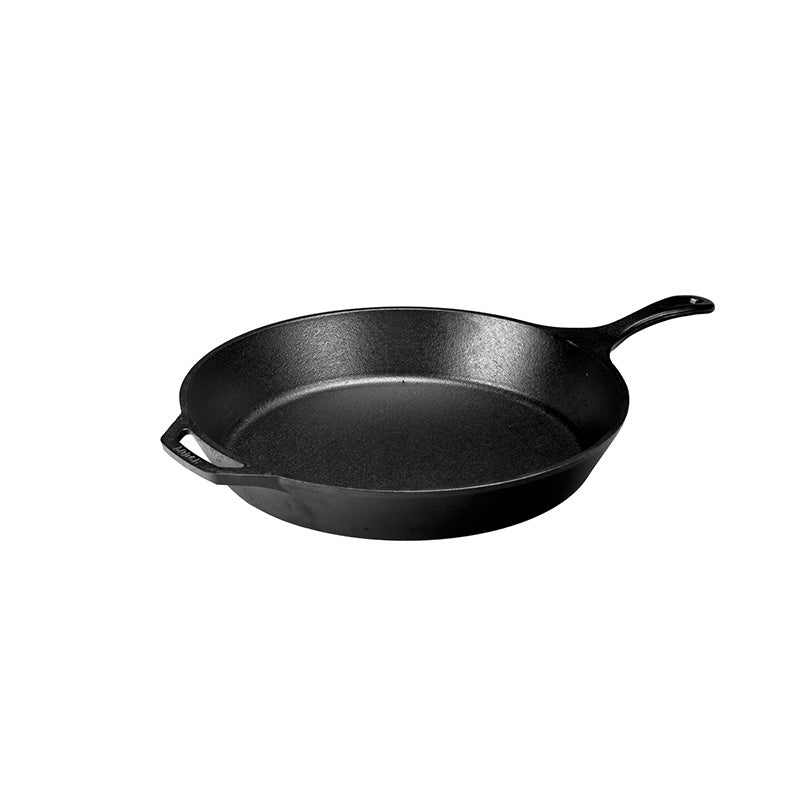
Lodge bare cast iron non-toxic cookwareBest cast iron2

Lodge

Best cast iron · coating-free & near-indestructible

The coating-free workhorse, cheap, and it can last generations.

Best for: searing, high heat, buy-it-once value

Bare cast iron is coating-free by definition: just iron and polymerized oil, no fluoropolymer, no glaze, nothing proprietary. Seasoned, it's genuinely non-stick, can outlive its owner, and adds a small amount of dietary iron that studies note can be meaningful with acidic dishes.

One honest detail matters to strict non-toxic cooks: most mass-market cast iron, Lodge included, ships pre-seasoned with a vegetable oil (Lodge uses soybean oil). Once polymerized in manufacturing it's generally considered inert, but if you want full control, buy it unseasoned (or strip and re-season with an oil you choose), or step up to a premium smooth-milled maker. Either way there is no synthetic coating.

Cast ironNo coatingPFAS-free (inherent)Very high heatRe-seasonable

Strengths

  • +Lowest cost, generational lifespan
  • +Excellent heat retention & searing
  • +Season it yourself, full control

Trade-offs

  • –Heavy; needs seasoning & upkeep
  • –Pre-seasoned with vegetable oil
  • –Reactive with acidic foods
Typical price$

✓ Ranked on disclosed chemistry, a commission never changes our pick.
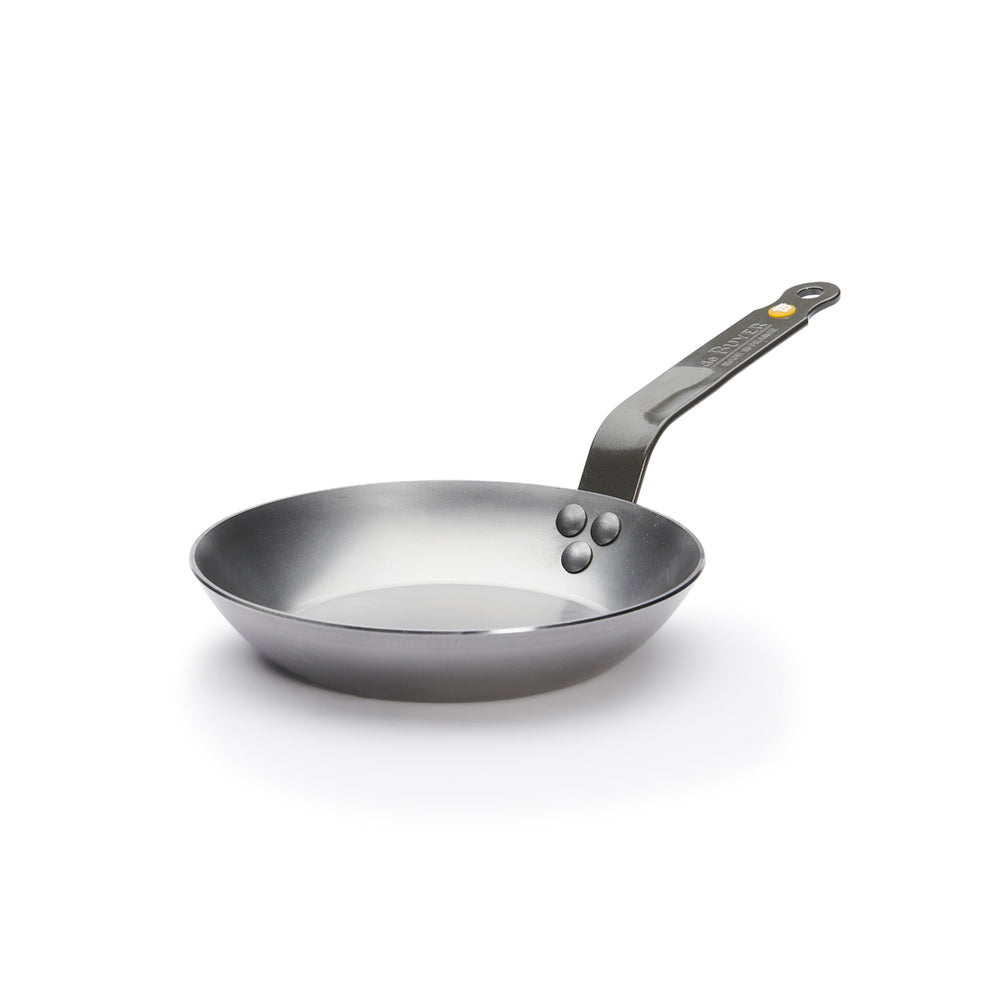
De Buyer carbon steel non-toxic panBest carbon steel3

De Buyer

Best carbon steel · the chef's coating-free non-stick

Seasons to a slick surface like cast iron, lighter and faster to heat.

Best for: high-heat cooking without a coating

Carbon steel is the restaurant answer to non-stick: it seasons to a slick, coating-free surface like cast iron, but it's lighter and heats faster. De Buyer's Mineral B ships with a food-safe beeswax film you simply wash off, then season yourself, no fluoropolymer and nothing proprietary.

Expect the same upkeep as cast iron (season, hand-wash, avoid long acidic simmers) plus a short break-in before it's fully non-stick. Because you season it yourself, you control exactly what goes on the surface, a plus for the coating-averse.

Carbon steelNo coatingPFAS-free (inherent)Very high heatSeasons non-stick

Strengths

  • +Coating-free, seasons non-stick
  • +Lighter & faster than cast iron
  • +You choose the seasoning oil

Trade-offs

  • –Needs seasoning & break-in
  • –Hand-wash; reactive with acid
  • –Not dishwasher-safe
Typical price$$

✓ Independent pick, we may earn a commission, never at extra cost to you.

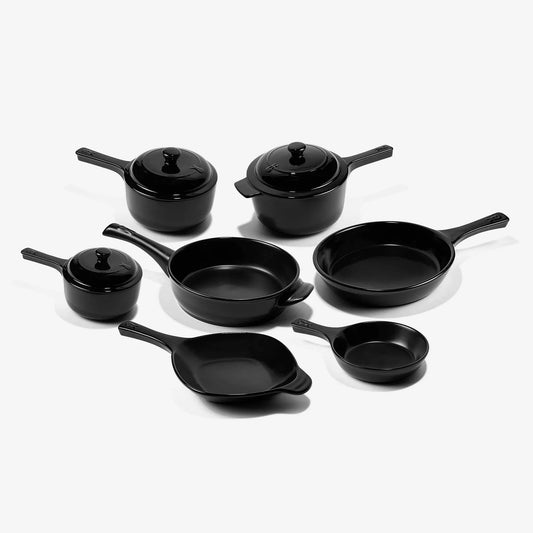
Xtrema 100% kiln-fired ceramic non-toxic cookwareBest 100% ceramic4

Xtrema

Best solid ceramic · fully inert, coating-free

Kiln-fired ceramic all the way through, literally nothing to wear off.

Best for: the coating-averse who also want non-reactive

Unlike ceramic-coated pans, Xtrema is kiln-fired clay all the way through, no aluminum core, no sol-gel layer, nothing that can flake. The maker publishes third-party lab results for PFAS, lead, cadmium and other metals, and the material is inert and non-reactive even at high heat.

The trade-off is brittleness: it can crack from thermal shock or a drop, and it heats slowly and evenly rather than searing. For anyone who distrusts coatings entirely and will handle it carefully, it's the truest "nothing to migrate" option on this list.

100% ceramicNo coatingPFAS/lead testedVery high heatNon-reactive

Strengths

  • +Fully inert, nothing to wear off
  • +Publishes third-party metals testing
  • +Oven, broiler & stovetop

Trade-offs

  • –Brittle; thermal-shock risk
  • –Heats slowly; not for searing
  • –Heavier handling
Typical price$$$

✓ Ranked on disclosed chemistry, a commission never changes our pick.
Not sure which coating-free material fits your cooking?

Our cookware hub walks through stainless vs. cast iron vs. carbon steel vs. ceramic in plain English, then sends you straight to the right guide.

Compare materials →
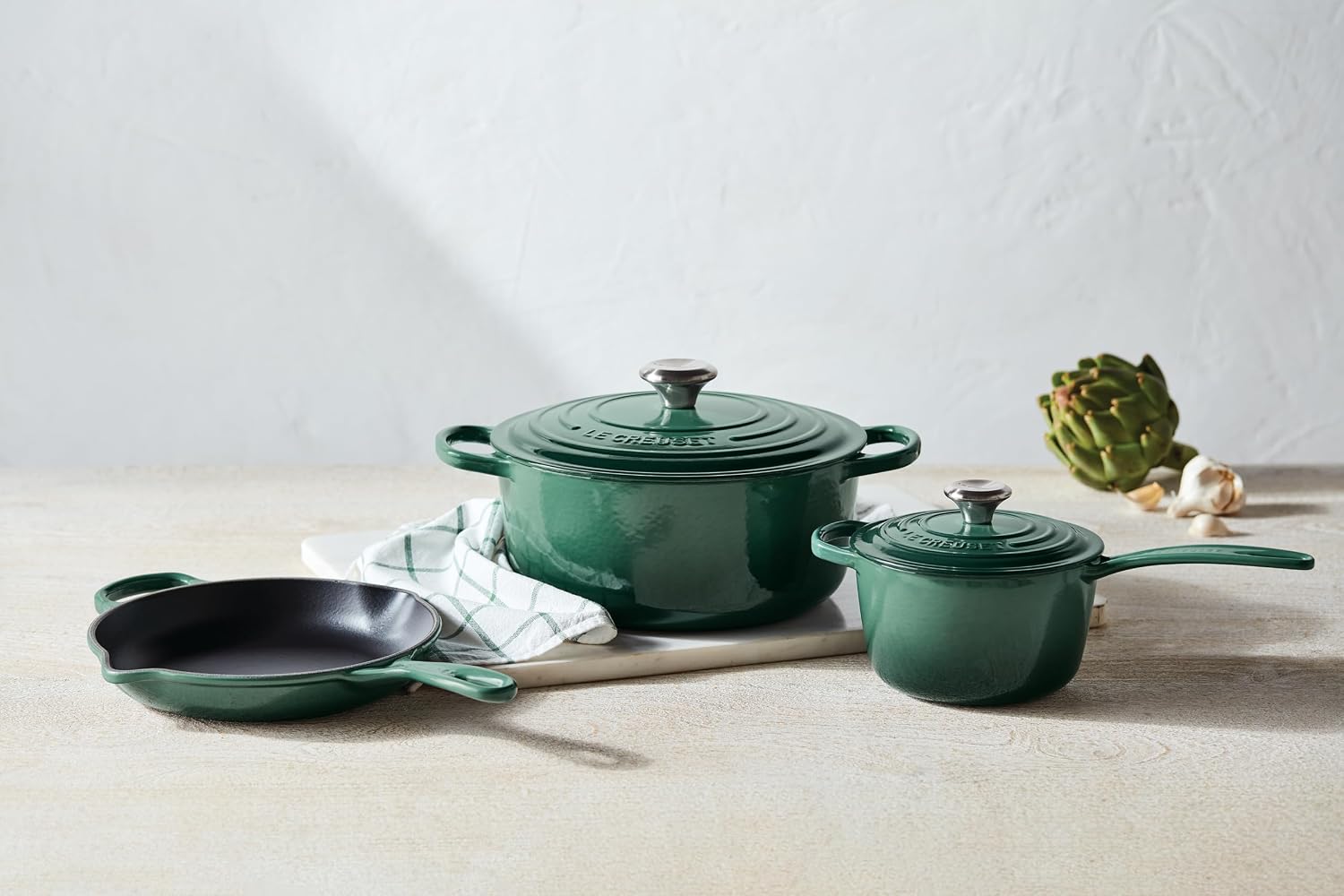
Le Creuset Signature enameled cast iron cookware setBest enameled set5

Le Creuset

Best enameled cast iron set · acid-safe

A whole enameled cast iron set that braises what bare iron can't, no coating, no seasoning.

Best for: a do-everything enameled set, braises, sauces, stovetop-to-oven

Le Creuset's Signature enameled cast iron set wraps iron in a fused-glass surface, not a synthetic coating, across multiple pieces (typically a skillet, saucepan and Dutch oven). It needs no seasoning, contains no PFAS, and handles the acidic braises and sauces bare cast iron can't. Le Creuset publishes that its enamels meet U.S. and California limits for lead and cadmium, which is exactly the disclosure this category needs.

Buy carefully: independent testing has flagged elevated heavy metals in cheap, brightly-colored imported enamels, so a maker that documents its enamel, and the specific line's Prop 65 status, is the safer path. Want one exceptional braiser instead of a full set? See Staub below.

Enameled cast ironMulti-piece setGlass enamel (no PFAS)Lead/cadmium disclosedNo seasoning

Strengths

  • +Braises, sauces & searing in one set
  • +No seasoning; easy to clean
  • +Documented heavy-metal compliance

Trade-offs

  • –Premium price; heavy pieces
  • –Enamel can chip if dropped
  • –Cheap imported enamels can leach
Typical price$$$$

✓ Independent pick, we may earn a commission, never at extra cost to you.

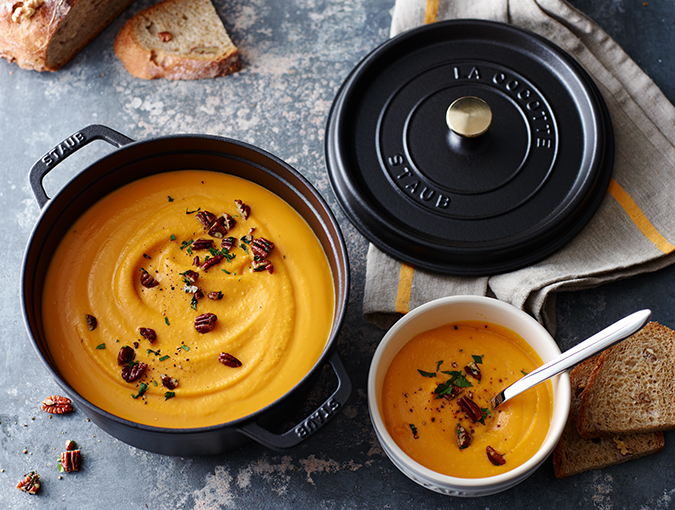
Staub enameled cast iron non-toxic Dutch ovenBest for braising6

Staub

Best single braiser · matte black enamel cocotte

One exceptional enameled cocotte, built to sear before the braise.

Best for: one standout Dutch oven / cocotte, not a full set

Where Le Creuset covers a full enameled set, Staub is the specialist single-piece braiser, a cast-iron cocotte with a rougher matte-black interior enamel that many cooks prefer for searing before a long braise. It's PFAS-free by construction and documents its enamel's compliance with lead and cadmium limits.

It shares the category's caveats, premium price, real weight, and enamel that can chip if dropped, but the disclosed enamel and acid-safe surface make it a genuinely non-toxic workhorse for slow cooking.

Enameled cast ironMatte enamelLead/cadmium disclosedOven-safeSear-friendly

Strengths

  • +Matte enamel sears well
  • +Excellent for braises & Dutch ovens
  • +Documented enamel compliance

Trade-offs

  • –Premium price; heavy
  • –Enamel can chip if dropped
  • –Fewer open-stock pieces
Typical price$$$$

✓ Ranked on disclosed chemistry, a commission never changes our pick.
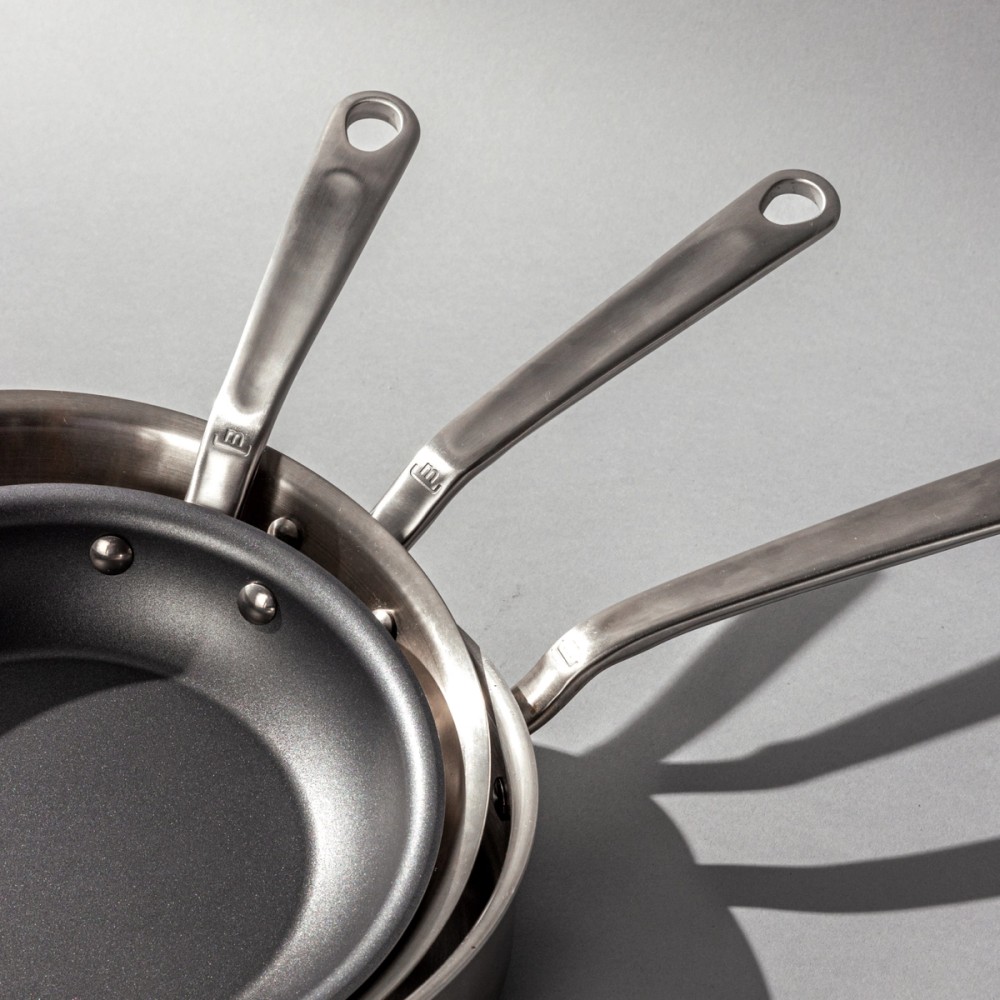
Made In stainless steel non-toxic cookware setBest value stainless7

Made In

Best value stainless · pro-grade for less

Fully-clad stainless with a restaurant pedigree at a friendlier price.

Best for: value seekers who still want coating-free

Made In sells 5-ply fully-clad stainless direct-to-consumer, which typically lands below All-Clad for comparable construction. Same core advantage, no coating to wear or leach, and it's widely used in professional kitchens, a useful real-world durability signal.

It shares stainless's honest caveats: a technique curve, and the same well-quantified trace nickel/chromium note from new pans. If you want coating-free without the flagship price, this is the value call.

5-ply stainlessNo coatingPFAS-free (inherent)Oven 500°F+Induction

Strengths

  • +Pro-grade clad build for less
  • +No coating, long lifespan
  • +Oven, induction & high heat

Trade-offs

  • –Technique needed to avoid sticking
  • –Trace nickel/chromium (new pans)
  • –Mostly direct-to-consumer stock
Typical price$$$

✓ Independent pick, we may earn a commission, never at extra cost to you.

11Chemicals and coatings to avoid

What to screen out

PFAS / PTFE / PFOA / PFOS / GenX non-stick coatings; lead & cadmium in some imported enamels and decorated glazes; and any "ceramic" or "non-toxic" pan whose coating chemistry is undisclosed. Remember: "PFOA-free" ≠ "PFAS-free," and both terms are largely unregulated. When a maker won't say, we treat the chemistry as unknown.

12The safest materials, by current evidence

Fewest open questions

Coating-free materials carry the least uncertainty: full-clad stainless steel, cast iron and documented enameled cast iron, carbon steel, and 100% kiln-fired ceramic. Each has trade-offs in weight, upkeep or price, covered per pick above, but none depends on a non-stick coating that can wear or leach.

13How to choose a non-toxic set

  • 1Default to coating-free. A coating, even a good ceramic one, is a wear item with proprietary chemistry. Stainless, cast iron, carbon steel and 100% ceramic have nothing to wear off. Choose a coating only when you specifically want easy non-stick and accept replacing it.
  • 2Not all stainless is equal. Look for fully-clad construction (not a cheap disc-bottom) in 18/10 or 18/8. If you're nickel-sensitive, choose a nickel-free line (18/0 or a dedicated nickel-free maker).
  • 3Mind the cast-iron seasoning. Most pans arrive pre-seasoned with a vegetable oil. Once polymerized it's generally inert, but if you want control, buy unseasoned (or re-season) with an oil you choose, or pick a smooth-milled maker that discloses its process.
  • 4With enamel, demand disclosure. Enamel is glass, not PFAS, but cheap, brightly-colored imported enamels have tested high for lead and cadmium. Favor makers that document compliance and check the line's Prop 65 status.
  • 5Match it to your cooking. High-heat searing → stainless, cast iron, carbon steel. Acidic braises → enameled cast iron. Non-reactive & zero-coating → 100% ceramic. Easy non-stick you'll replace → coated ceramic.
  • 6Buy for lifespan, not hype. A cheaper coating-free pan almost always outlasts an expensive coated one, and "non-toxic" on the box is marketing, not a guarantee.

14What the evidence doesn't settle

Real-world migration from an intact ceramic coating isn't well quantified in independent long-term studies, and proprietary formulas limit what anyone can verify. Low-dose PFAS health research is still evolving, and "PFAS" itself is a moving target as replacements like GenX appear. We rank by disclosed chemistry and certification, hedge where the science is unsettled, and update these picks as better evidence publishes.

15 · FAQ

Frequently Asked Questions About Non-Toxic Cookware

The questions shoppers ask most, with hedged, cited answers.

What is the safest non-toxic cookware?

Coating-free materials, stainless steel, cast iron, carbon steel and 100% ceramic, carry the fewest open questions, since there's no non-stick coating whose chemistry can wear or leach. The best pick depends on how you cook.

Is ceramic-coated cookware safe, and does it last?

Sol-gel ceramic is marketed PFAS-free and widely used; the honest caveat is durability, coatings typically degrade over roughly 1 to 3 years, after which non-stick performance drops. It's a convenience surface you'll replace.

Is "PFAS-free" or "PFOA-free" enough?

"PFOA-free" rules out one compound; PFAS is a family of thousands. Look for a broader "PFAS-free" disclosure backed by a third-party lab report, and remember both terms are largely unregulated. More on PFAS →

What cookware materials have no coating at all?

Fully-clad stainless steel, cast iron (bare or enameled), carbon steel and 100% kiln-fired ceramic. None has a fluoropolymer non-stick layer.

Is stainless steel cookware non-toxic (nickel concerns)?

Stainless has no coating. Peer-reviewed research has measured trace nickel and chromium migration, mainly from new pans and with acidic foods; amounts are generally small and decline with use. Those with a nickel allergy may prefer nickel-free stainless.

Which non-toxic cookware lasts the longest?

Coating-free materials: cast iron and carbon steel are often generational, and full-clad stainless lasts decades. Coated ceramic is shortest-lived because the non-stick surface wears.

Is Teflon / PTFE actually dangerous?

PTFE is a fluoropolymer in the PFAS family, permitted by the FDA for food contact. Documented concerns are fume release when overheated (above ~500°F/260°C) and coating wear. We report what regulators say rather than issue a verdict.

Is cast-iron seasoning non-toxic?

Seasoning is polymerized oil, not a synthetic coating. Most pans ship pre-seasoned with a vegetable oil (often soybean); once polymerized it's generally considered inert. For full control, buy unseasoned, or strip and re-season, with an oil you choose.

Is all stainless steel cookware the same?

No. Favor fully-clad construction (bonded layers, not a cheap disc-bottom) in 18/10 or 18/8 from a reputable maker. 18/10 contains nickel; if you're nickel-sensitive, choose a nickel-free line such as 18/0 or a dedicated nickel-free maker.
S

Skyler , Founder & Editor

I started Non-Toxic Kitchen Co. to cut through vague "non-toxic" labels by organizing what authoritative sources actually say about cookware. These rankings are research syntheses of manufacturer specs, third-party lab reports and aggregated verified-owner reviews, not hands-on cooking or our own lab tests, and every safety claim is cited. Read our full methodology →

16Sources & further reading

Every safety statement on this page links to a primary or authoritative source. The bodies we rely on most:

Informational only, not medical advice. This guide translates what regulators and peer-reviewed research report; it does not diagnose, treat, or make safety guarantees. Consult a qualified professional for medical guidance.

Ready to pick your set?

Go coating-free with our No. 1 overall (All-Clad stainless) for a set that lasts decades, or reach for cast iron on a budget. Every pick is coating-free, so there is nothing to wear off or re-buy.

See the No. 1 pick → Best cast iron →
Allclad non-toxic kitchen product Editor's No. 1 All-Clad D3Best overall non-toxic cookware · coating-free stainless
See the pick →