NTKCEST · 2026
The 2026 Roundup · 3 picks · solid ceramic & clay

Best Non-Toxic
Ceramic Cookware
of 2026

The best non-toxic ceramic cookware splits into two very different things: solid 100% ceramic with no coating, and ceramic-coated pans with a PFAS-free sol-gel layer on aluminum. "Non-toxic" is not a regulated term, so we ignore the label and read the construction. We rank only coating-free solid ceramic and clay here, and explain why sol-gel "ceramic" coatings, however transparent the brand, do not make the list.

EPA·FDA·NSF·Prop 65·Every claim cited
SWritten by Skyler, Founder & Editor · Last updated Sep 2026
3solid-ceramic picks
2ceramic types compared
0sol-gel coatings here
$–$$$every budget covered

Key Takeaways

  • With ceramic cookware, the label hides the most important fact: whether you are buying solid ceramic or a thin ceramic coating on aluminum.
  • Our top pick is Xtrema: Solid ceramic all the way through, so there is literally no coating to wear off or leach.
  • Fewest open questions
  • Non-Toxic Kitchen Co. ranks every ceramic cookware by material science and disclosed evidence, not marketing claims, with each safety point cited. Compare safer picks in our guide.
Disclosure: Some links are affiliate links. If you buy through one we may earn a commission at no extra cost to you, and it never changes our evidence-based rankings. Full affiliate disclosure →

01What Makes the Best Non-Toxic Ceramic Cookware

With ceramic cookware, the label hides the most important fact: whether you are buying solid ceramic or a thin ceramic coating on aluminum.

The best non-toxic ceramic cookware comes in two very different forms, and the label rarely tells you which you are buying. "Ceramic-coated" pans are aluminum bodies sprayed with a thin sol-gel (sand- or silica-based) non-stick layer, marketed as ceramic. "100% ceramic" cookware, such as Xtrema, is kiln-fired clay all the way through with no coating at all. Because "non-toxic" is not a regulated term, we read the construction rather than the marketing.

The appeal of ceramic non-stick is that it is PFAS-free: unlike PTFE (Teflon), a proper sol-gel coating contains no fluoropolymers, so it avoids the forever chemicals the EPA describes, including PFOA and PFOS. The honest catch is durability: a coating is a wear item, and user reviews and material science put ceramic non-stick life at roughly one to three years, shorter than PTFE, after which release fades.

The other questions are about what sits under and around the coating. Most coated ceramic pans use an anodized or aluminized aluminum base, and cheap versions can carry undisclosed additives, which is why lead and cadmium limits under Proposition 65 and California AB1200 matter. Overheating shortens any coating life, so ceramic pans are for low to medium heat, not searing. The FDA regulates these as food-contact materials, but the exact coating chemistry stays proprietary, so third-party testing is the signal we trust.

02 · METHOD

How we researched
and vetted these picks

We do not run a test kitchen or a lab. Rankings are a transparent synthesis of what makers disclose and what regulators say, and we flag what the evidence cannot settle.

01

Read the disclosures

We start from manufacturer specifications, published third-party lab reports and certifications, not the marketing page.

02

Cite the science

Every health or safety statement links to the EPA, FDA, Prop 65, NIH or peer-reviewed research.

03

Rank by evidence

Picks are ranked on disclosed chemistry, third-party grade and aggregated verified-owner reviews, never on hands-on cooking or our own lab tests, which we do not do.

03 · AT A GLANCE

All 3 picks compared
solid ceramic vs coated, by construction and coating life

Ranked by disclosed chemistry and certification. Price tiers are relative; live prices load per pick.

CookwareConstructionCoatingPFAS-freeCoating lifePriceCheck price
Xtrema100% ceramicNone (solid)InherentN/A (solid)$$$View →
Emile HenryGlazed high-fired ceramicNone (fired glaze)InherentN/A (no coating)$$$View →
VitaClayUnglazed natural clayNone (unglazed)InherentN/A (no coating)$$View →

Summary for comparison, disclosures and prices are cited and loaded per product on the final build.

THE PICKS · RANKED

Solid ceramic,
no coating to fail

We rank by construction, not marketing: solid 100% ceramic has no coating to wear off, scratch or leach, so it is the only ceramic cookware we recommend here. Every pick is PFAS-free and inert all the way through. Coated 'ceramic' (sol-gel) pans are a different, wear-prone category we explain in the cookware hub rather than rank here.

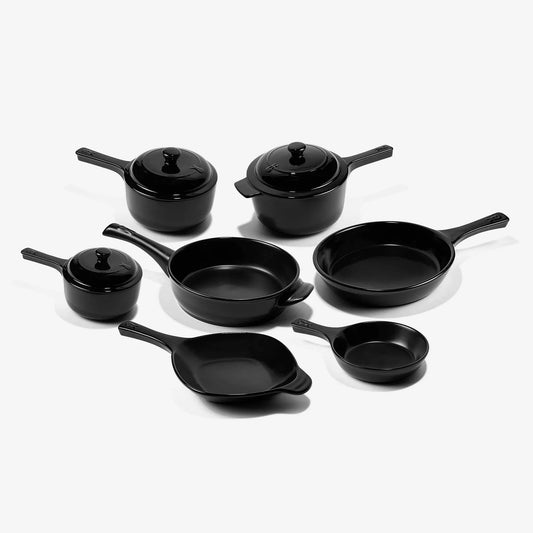
Xtrema best non-toxic ceramic cookware★ Best overall1

Xtrema

Best overall · solid 100% kiln-fired ceramic

Solid ceramic all the way through, so there is literally no coating to wear off or leach.

Best for: the coating-averse who want a fully inert surface

Unlike ceramic-coated pans, Xtrema is kiln-fired clay all the way through, with no aluminum core and no sol-gel layer, so nothing can flake or degrade. The brand publishes third-party lab results for PFAS, lead, cadmium and other metals, which is more transparency than most cookware offers, and the material is inert and non-reactive even at high heat.

The trade-off is brittleness: solid ceramic can crack from thermal shock or a hard drop, and it heats slowly and evenly rather than searing quickly. It is heavier to handle and needs gentler treatment than metal. For anyone who distrusts coatings entirely, though, it is the truest nothing-to-migrate option in the category, which is why it leads the list.

100% ceramicNo coatingThird-party testedVery high heatNon-reactive

Strengths

  • +Fully inert, nothing to wear off
  • +Publishes third-party metals testing
  • +Oven, broiler and stovetop

Trade-offs

  • –Brittle, thermal-shock risk
  • –Heats slowly, not for searing
  • –Heavier handling
Typical price$$$

✓ Ranked first because solid ceramic has no coating at all, a commission never changes that.

Coated ceramic or solid ceramic?

Our cookware hub explains sol-gel ceramic coatings versus 100% ceramic in plain English, then points you to the right pan.

Compare ceramic options →
Best flameware2

Emile Henry

Best Dutch oven / braiser · glazed flameware ceramic

French high-fired ceramic whose Flame line goes straight onto the burner, finished with a fired glaze rather than a wearing non-stick coating.

Best for: braising, stews and bread baking in solid ceramic rather than coated metal

Emile Henry has made high-fired Burgundy clay ceramic since the 1800s, and its Flame line is flameware rated to go directly on a gas or electric burner, not only in the oven. The cooking surface is a fired glaze, a glass-like layer bonded to the clay, which is fundamentally different from a sol-gel non-stick coating: it is not a wear item that provides release, it is the inert finished surface of the ceramic itself. The brand states its glazes are free of lead and cadmium.

This is the pick for one-pot cooking: braisers, Dutch ovens, tagines and bread cloches that move from stovetop to oven to table. The trade-offs are the usual ceramic ones, namely weight and thermal-shock care, so avoid sudden temperature swings, and glazed ceramic is not a quick-searing metal. For coating-free braising and baking from a long-established name, it is the strongest companion to a solid-ceramic skillet.

High-fired ceramicFired glaze, not sol-gelStovetop Flame lineNo lead or cadmium (stated)Oven to table

Strengths

  • +No wearing non-stick coating
  • +Stovetop-capable flameware
  • +Long-established, documented brand

Trade-offs

  • –Thermal-shock care needed
  • –Heavy to handle
  • –Not a quick-sear pan
Typical price$$$

✓ Ranked on a fired glaze rather than a sol-gel coating, from a documented maker.

Best clay cooker3

VitaClay

Best electric clay cooker · unglazed natural clay pot

An unglazed natural-clay inner pot in an electric base, with no coating, no glaze and no metal touching the food.

Best for: hands-off slow cooking, rice, soups and stews in inert clay

VitaClay takes a different route to coating-free ceramic: an unglazed natural clay inner pot that sits in an electric base, working as a slow cooker, rice cooker and multicooker. Because the pot is fired clay rather than coated metal, there is no sol-gel layer, no aluminum and no glaze touching the food, and the brand markets it as free of lead, PFAS and plastic in the food zone.

This is a format pick rather than a stovetop pan: you choose it for hands-off clay cooking, not for searing. The clay pot is hand-wash and, like all ceramic, needs gentle thermal handling, and the electronics make it an appliance to plug in rather than a pot for the burner. For set-and-forget stews, grains and bone broth in an inert clay vessel, it rounds out the category alongside the stovetop ceramics above.

Unglazed natural clayNo coating or glazeElectric slow/rice cookerNo metal food contactLead- and PFAS-free (stated)

Strengths

  • +Inert clay, nothing to wear
  • +Hands-off slow cooking
  • +No metal or coating in the food zone

Trade-offs

  • –An appliance, not a stovetop pan
  • –Hand-wash clay pot
  • –Clay needs gentle handling
Typical price$$

✓ Ranked on an unglazed inert clay pot with no coating, judged on format fit.

04Chemicals and coatings to avoid in ceramic cookware

What to screen out

Avoid any "ceramic" pan that will not disclose its coating chemistry or publish third-party results, and avoid PTFE pans mislabeled as ceramic; the EPA notes that "PFOA-free" does not mean "PFAS-free." Be cautious with very cheap imported ceramic-coated pans, where lead or cadmium can appear in the base or decoration, a concern regulated under Proposition 65 and California AB1200. And avoid high-heat searing on any coated pan, which shortens coating life. When the chemistry is undisclosed, treat it as unknown.

05The safest materials, by current evidence

Fewest open questions

A 100% ceramic pan such as Xtrema carries the least uncertainty, because it is solid kiln-fired clay with no coating to wear or leach and published third-party metals testing. Among coated pans, the safest choices are sol-gel ceramic lines that publish independent PFAS, lead and cadmium results. The FDA regulates these as food-contact materials, but published testing is the signal we weigh most.

06How to choose the best non-toxic ceramic cookware

  • 1Know coated from solid. 100% ceramic is solid clay with no coating; ceramic-coated is a sol-gel layer on aluminum. Only solid ceramic has nothing to wear off.
  • 2Prioritize published testing. Brands that publish third-party PFAS, lead and cadmium results, such as Xtrema, give you more than a marketing claim.
  • 3Accept the coating lifespan. A ceramic coating typically lasts about one to three years before release fades. If that is a dealbreaker, choose solid ceramic or a coating-free material.
  • 4Cook low to medium. Overheating is the fastest way to ruin a ceramic coating, so these pans are for eggs and everyday cooking, not high-heat searing.
  • 5Use gentle utensils. Wood or silicone tools and hand-washing extend coating life. Metal utensils and the dishwasher shorten it.
  • 6Check the base and origin. Prefer a disclosed aluminum or clad base from a maker that documents Prop 65 and AB1200 compliance over an anonymous imported pan.

07What the evidence doesn't settle

Real-world migration from an intact ceramic coating is not well quantified in independent long-term studies, and proprietary sol-gel formulas limit what anyone can verify. Coating-lifespan figures come from owner reports and material science, so they are estimates, not guarantees. "Non-toxic" and "ceramic" are largely unregulated marketing terms, so we rank by construction and published testing, hedge where the science is thin, and update as better evidence publishes.

FAQ

Frequently Asked Questions About Ceramic Cookware

The questions shoppers ask most, with hedged, cited answers.

Is ceramic cookware non-toxic?

It depends on the type. 100% ceramic (solid kiln-fired clay) has no coating and is inert. Ceramic-coated pans use a PFAS-free sol-gel layer that is generally considered safe when intact, but the coating wears over time and its exact chemistry is proprietary, so we favor brands that publish third-party testing.

Is ceramic-coated the same as 100% ceramic?

No. Ceramic-coated pans are aluminum bodies with a thin sol-gel non-stick layer marketed as ceramic. 100% ceramic, such as Xtrema, is solid clay all the way through with no coating. Only the solid type has nothing to flake or degrade.

How long does a ceramic non-stick coating last?

User reviews and material science suggest roughly one to three years of good release, shorter than PTFE and much shorter than coating-free materials. Low heat, gentle utensils and hand-washing extend it; overheating shortens it.

Does ceramic cookware contain lead or cadmium?

Reputable brands publish testing showing their coatings meet lead and cadmium limits. The risk is with cheap imported pans that do not disclose, where these metals can appear in the base or decoration, which is why Prop 65 and AB1200 compliance matters.

Can you use metal utensils on ceramic cookware?

It is best not to. Metal utensils scratch and shorten the life of any ceramic non-stick coating. Wood or silicone tools protect the surface. Solid 100% ceramic is more scratch-resistant but can still chip, so treat it gently too.

What is Thermolon, and is GreenPan "ceramic"?

Thermolon is the brand name of the sol-gel ceramic coating used by GreenPan and related lines. It is a coating applied over an aluminum body, not solid ceramic, so despite the ceramic label it is a non-stick layer that wears over time rather than a solid clay pan like Xtrema. GreenPan states Thermolon is free of PFAS, lead and cadmium, but it is still a finite coating, which is why we keep coated and solid ceramic in separate categories and list only the solid type here.

Does ceramic cookware need NSF certification?

NSF certification is an independent food-safety standard some coating makers cite, and it is a useful signal because it means a third party checked the claim rather than the brand alone. It matters most for coated pans, where the coating chemistry is proprietary. For solid 100% ceramic the whole pan is inert fired clay, so published third-party metals testing for lead and cadmium tells you more than a coating certification does.

Can Emile Henry ceramic go on the stovetop?

Only the Flame line is rated for direct stovetop use; most Emile Henry ceramic is oven, broiler and microwave bakeware rather than a burner pan. The Flame range uses the same high-fired Burgundy clay with a fired glaze and is designed for gas or electric burners with gradual heating. As with all ceramic, avoid sudden temperature swings to prevent thermal-shock cracking, and let the pan come up to heat slowly.

Is an unglazed clay cooker like VitaClay safe?

An unglazed natural-clay pot has no coating and no glaze, so there is no sol-gel layer or metal touching the food, and makers such as VitaClay market theirs as free of lead and PFAS. The trade-offs are practical rather than chemical: clay is porous and hand-wash only, it needs gentle thermal handling, and because it sits in an electric base it is an appliance for slow cooking and grains rather than a stovetop searing pan.
S

Skyler, Founder & Editor

I started Non-Toxic Kitchen Co. to cut through vague "non-toxic" labels by organizing what authoritative sources actually say. These rankings are research syntheses of manufacturer specs, third-party lab reports and aggregated verified-owner reviews, not hands-on cooking or our own lab tests, and every safety claim is cited. Read our full methodology →

08Sources & further reading

Every safety statement on this page links to a primary or authoritative source. The bodies we rely on most:

Related guides: Xtrema cookware review

Informational only, not medical advice. This guide translates what regulators and peer-reviewed research report. It does not diagnose, treat, or make safety guarantees. Consult a qualified professional for medical guidance.

Ready to choose your ceramic cookware?

Go coating-free with solid 100% ceramic, glazed flameware or an unglazed clay cooker for a surface that never wears out. If you still weigh a coated "ceramic" pan elsewhere, favor one that publishes third-party testing and accept its finite coating life.

See the No. 1 ceramic pick → Back to the cookware hub →