NTKCEST · 2026
In-Depth Review · Enameled Cast Iron

Le Creuset Dutch Oven Review: Is Enameled Cast Iron Non-Toxic?

This Le Creuset Dutch oven review answers the question shoppers really have: is enameled cast iron non-toxic, and does it contain lead or cadmium? Le Creuset's surface is vitreous enamel, glass fused to cast iron, so there is no PFAS coating to wear off and nothing to reapply. The brand states its enamel meets lead and cadmium limits, and independent testing of modern pieces has been reassuring, with a color and vintage caveat. This research-based review explains the enamel, the safety evidence, the durability, and whether it is worth the premium.
EPA·FDA·Prop 65·NIH·Every claim cited
SWritten by Skyler, Founder & Editor · Research-based, not hands-on · Last updated Sep 2026
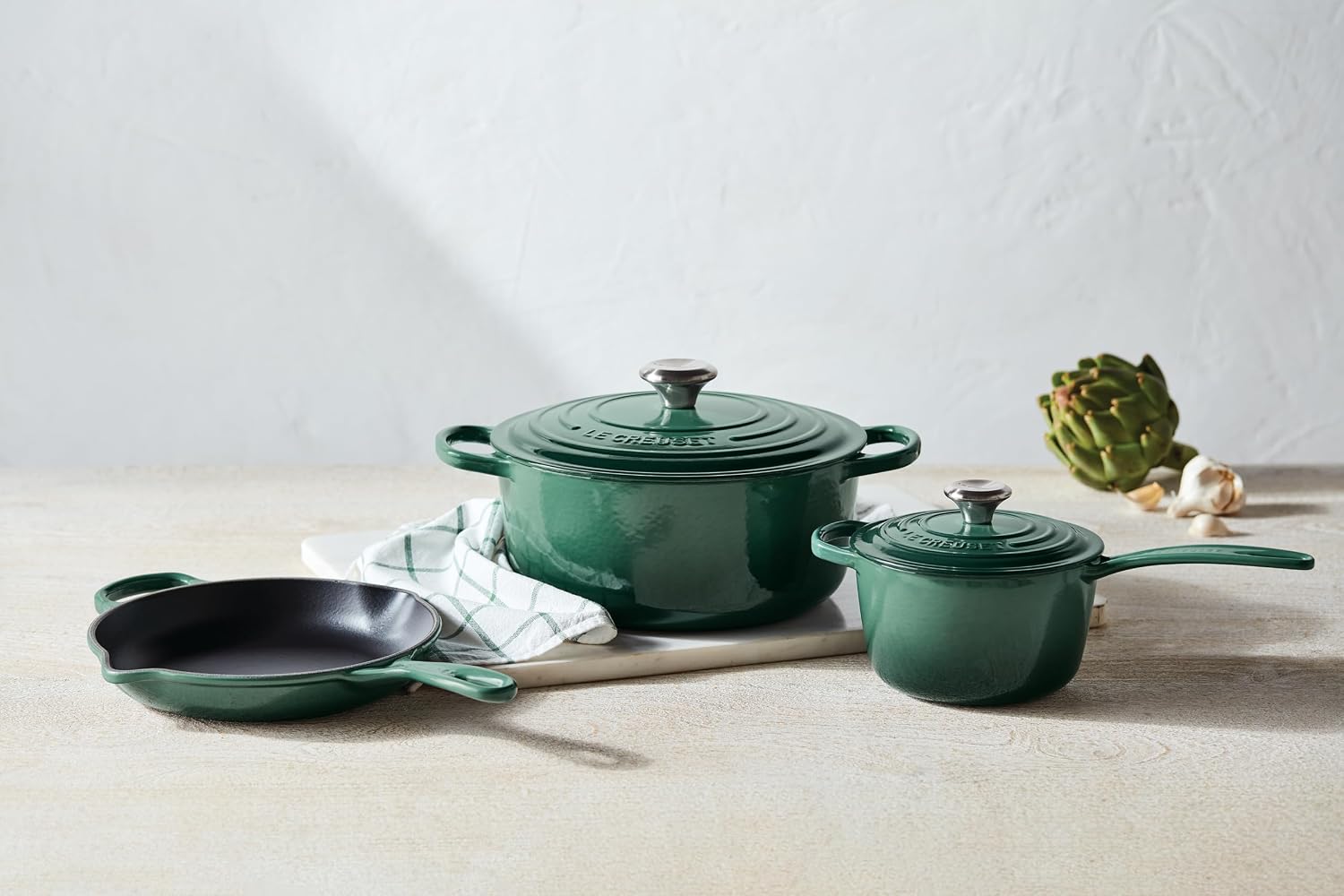
Le Creuset enameled cast iron Dutch oven
Our verdict at a glance★ Buy-it-for-life
PFAS / coating concernNone (glass enamel)
Lead / cadmium (modern)Compliant (per brand)
DurabilityGenerational with care
Everyday valuePremium price · heavy
Typical price$$$Check price →

✓ Research-based rating, a commission never changes our verdict.
0PTFE / PFOA / PFAS (no coating)
~790°Cenamel firing temperature
Generationstypical lifespan with care
Francewhere it's made

The verdict, in one line

A coating-free, PFAS-free pot that lasts generations, worth it if you accept the weight and the price.

Le Creuset's enameled cast iron sidesteps the whole non-stick problem: the surface is inert glass enamel, so there is no PTFE or PFAS, and no seasoning to maintain. The brand states its modern enamel meets lead and cadmium limits, and independent testing of modern interiors has generally been reassuring. The honest trade-offs are weight, a premium price you pay largely for the name and finish, and enamel that can chip. It is an excellent, defensible non-toxic choice, though other reputable enameled cast iron delivers similar safety for less.

Key Takeaways

  • The le creuset dutch oven is a coating-free, PFAS-free pot that lasts generations, worth it if you accept the weight and the price.
  • No non-stick coating, so no PTFE, PFOA or PFAS at all
  • Vitreous glass enamel is inert and made to meet lead/cadmium limits
  • Non-Toxic Kitchen Co. ranks every le creuset dutch oven by material science and disclosed evidence, not marketing claims, with each safety point cited. Compare safer picks in our guide.
Disclosure: Some links are affiliate links. If you buy through one we may earn a commission at no extra cost to you, and it never changes our evidence-based verdict. Full affiliate disclosure →

01What This Le Creuset Dutch Oven Review Covers: Vitreous Enamel Explained

A Le Creuset Dutch oven is enameled cast iron: a cast-iron body coated in vitreous enamel, a glass layer fused to the metal at high heat.

Unlike a non-stick pan, the surface here is not a sprayed-on polymer. Vitreous enamel is powdered glass fused to cast iron in a kiln at roughly 790°C, forming a hard, smooth, inert layer. That glass surface is what you cook on, so there is no seasoning to maintain and no fluoropolymer coating that can degrade.

The result is heavy, even, heat-retaining cookware that goes from stovetop to oven and handles braises, soups, breads and stews, and, kept from chipping, lasts for decades. Le Creuset makes its Dutch ovens (the round French oven is the icon) in France, in a wide range of sizes and colors.

Because the cooking surface is glass rather than a coating or bare metal, the non-toxic questions are specific: does the enamel contain lead or cadmium, and does the color matter. Those are the questions this review focuses on.

Le Creuset at a glance

Cooking surfaceVitreous (glass) enamel
BaseCast iron
PTFE / PFOA / PFASNone (not a coating)
Lead / cadmiumCompliant, modern (per brand)
Oven-safeHigh (check lid-knob rating)
InductionYes
SeasoningNot required
Made inFrance

02Is Le Creuset Non-Toxic? Lead, Cadmium & Prop 65

On the coating question, enameled cast iron is straightforward: there is no non-stick coating at all, so no PTFE, PFOA or PFAS. The EPA family of concerns simply does not apply to a glass-enamel surface, which is one reason it is a favorite among people avoiding non-stick.

The relevant question for any enamel is heavy metals. Historically, some colored glazes used lead or cadmium, which is why California Proposition 65 sets limits and the FDA regulates food-contact surfaces. Le Creuset states its enamel meets these lead and cadmium requirements, and modern pieces are made to comply. Because "non-toxic" is an unregulated marketing term, we treat that as a manufacturer claim to be verified rather than a guarantee.

The honest nuance, which we detail below, is twofold: independent testing of enamels has occasionally flagged higher metal readings on certain bright exterior colors and on vintage pieces, and cheap imported enameled cast iron from unbranded sellers is far more likely to leach than an established maker held to Prop 65. The interior cooking surface is what matters most for food contact.

Enameled cast iron: what it is & what it isn't

What it is

  • ✓Cast iron coated in vitreous enamel, a glass layer fused to the metal
  • ✓Free of PTFE, PFOA and PFAS, there is no non-stick coating
  • ✓Made to meet lead and cadmium limits on modern pieces (per brand)
  • ✓Oven-safe, induction-ready and buy-it-for-life with care

What it isn't

  • ✕A non-stick pan, food will stick without enough fat or liquid
  • ✕Immune to chipping, a dropped or knocked rim can crack the enamel
  • ✕Guaranteed identical to cheap unbranded imported enameled cast iron
  • ✕The same as bare or seasoned cast iron

Informational only, not medical advice. We describe what the maker and regulators disclose, we do not diagnose or make safety guarantees.

See today's Le Creuset price

Coating-free enameled cast iron that lasts generations · a commission never changes our verdict

Check price →

03Durability: Chipping, Crazing & Care

The enamel is the durable part and the vulnerable part at once. It will not wear out like a non-stick coating, and with reasonable care a Le Creuset Dutch oven lasts for generations. But glass can chip if the rim is knocked or the pot is dropped, and fine surface crazing (hairline lines in the glaze) can appear over years of thermal cycling.

Care is simple: avoid metal utensils that can scratch, do not overheat an empty pot, let it cool before washing, and hand-wash the enameled interior even where a maker allows the dishwasher, since it dulls the finish. Chipped enamel on the food-contact interior is a reason to retire a piece; minor exterior chips are cosmetic.

Vitreous enamelCast ironNo seasoning neededInduction-readyHandle rim gently

04What Independent Leach Tests Show (and the Color and Vintage Caveat)

This is where an honest review separates marketing from evidence. Independent testers, including Tamara Rubin of Lead Safe Mama, have used XRF screening on enameled cast iron and generally reported that the cream-colored cooking interiors of modern branded pieces read low or non-detect for lead. The strongest cautions attach to bright exterior colors and to vintage cookware.

Two caveats follow. First, some bright red, orange and yellow exterior enamels have historically shown higher lead or cadmium in the exterior glaze; the exterior is not the food-contact surface, but strict buyers may prefer lighter colors. Second, vintage and antique enameled cast iron predates modern standards and has been flagged in independent testing, so treat old pieces as decorative unless verified.

Remember that XRF measures total metal content, not what leaches into food, so a low interior reading is reassuring on both counts. The clearest takeaway: buy modern, buy from an established maker held to Prop 65, and favor the cooking interior over exterior color when in doubt.

05Performance, Oven-Safe Use & Induction

Enameled cast iron is prized for heat retention, not quick response. It heats slowly and evenly and holds temperature superbly, which makes it ideal for braises, stews, soups, no-knead bread and low, slow cooking. It is not a fast saute or delicate-egg pan, and food will stick without enough fat or liquid.

It is oven-safe to high temperatures, though the limiting factor is often the lid knob, so check whether yours is rated for high heat or needs a metal replacement. It works on every cooktop including induction, and it needs no seasoning. Preheat gently on low-to-medium and let the mass do the work.

06Pros & cons

Strengths

  • +No non-stick coating, so no PTFE, PFOA or PFAS at all
  • +Vitreous glass enamel is inert and made to meet lead/cadmium limits
  • +Exceptional heat retention for braises, stews, soups and bread
  • +Oven-safe, induction-ready, no seasoning, and lasts generations

Trade-offs

  • –Premium price for the name, color and finish
  • –Heavy, and enamel can chip if the rim is knocked or dropped
  • –Not a non-stick or fast-saute pan; food sticks without fat
  • –Bright exterior colors and vintage pieces warrant more caution

07What Verified Owners Report

Since we do not cook on the pots, we synthesize aggregated verified-owner reviews. Owners overwhelmingly praise the heat retention, the even braising, the easy cleanup of a glass surface, and the longevity, many describing pieces used for decades or handed down.

The recurring criticisms are the weight, which is real, the premium price, and enamel chipping when a rim is knocked or the pot is dropped. A minority report interior staining or crazing over time, largely cosmetic. Owners who avoid thermal shock and metal utensils report the fewest problems.

08Enameled Cast Iron Safety Terms Explained

A few terms cut through the marketing. Vitreous enamel is glass fused to metal, inert and non-porous. PFAS are the persistent non-stick chemicals the EPA and NIH/NIEHS track, and enameled cast iron contains none of them. Prop 65 is the California program that limits lead and cadmium in consumer goods.

The materials to actually screen out are lead or cadmium in a glaze, most relevant in cheap unbranded imports and vintage pieces, and PFAS non-stick, which is not present here at all. With a modern, established-brand enameled Dutch oven, the surface chemistry is among the most settled in cookware; the main trade-offs are weight, price and chip risk, not toxicity.

09How We Researched This Le Creuset Dutch Oven Review

This Le Creuset Dutch oven review is research-based, not hands-on. We did not braise, sear or drop-test any pot. We synthesized Le Creuset's material and compliance statements, independent leach-testing coverage of enameled cast iron, FDA and California Prop 65 guidance on lead and cadmium, and aggregated verified-owner reviews, citing a primary source for each safety point.

What we cannot verify: the exact metal content of every color and production run, and long-term wear in your kitchen. On price, Le Creuset sits at the premium end, and much of what you pay for is finish, color range and brand longevity rather than better safety than other reputable enameled cast iron. A cheaper established brand can be nearly as safe; an unbranded import is the real risk.

10How Le Creuset Compares to Other Non-Toxic Dutch Ovens

Le Creuset is the icon, but its safety case is shared by other coating-free options that cost less. Two worth weighing:

See all non-toxic Dutch ovens, ranked →

11Who it's for, and who should skip it

Buy it if you…

  • ✓Want coating-free, PFAS-free cookware you never re-season
  • ✓Cook braises, stews, soups, bread and low-and-slow dishes
  • ✓Value a glass-smooth, easy-clean interior and even heat
  • ✓Want a buy-it-for-life piece and will handle it with care
  • ✓Cook on induction and want oven-to-table versatility
Check price →
FAQ

Frequently Asked Questions About Le Creuset Dutch Oven

The questions shoppers ask most, with hedged, cited answers.

Is Le Creuset non-toxic?

Le Creuset is enameled cast iron, so the cooking surface is inert vitreous glass with no PTFE, PFOA or PFAS, and the brand states its enamel meets lead and cadmium limits. "Non-toxic" is an unregulated term, so we describe the material and the compliance claim, backed by independent testing that has generally read modern interiors low for lead, rather than issuing a guarantee.

Does Le Creuset contain lead or cadmium?

Le Creuset states its modern enamel meets Prop 65 lead and cadmium limits, and independent XRF testing has generally read the cream cooking interiors of modern pieces low or non-detect for lead. The main cautions are certain bright exterior colors and vintage pieces, which have shown higher readings in some tests.

Is enameled cast iron safe?

Enameled cast iron uses vitreous enamel, a glass layer fused to iron, which is inert and non-porous and contains no non-stick chemicals. From established makers held to Prop 65, it is considered a low-concern surface. The real risk sits with cheap unbranded imports and vintage pieces, where lead or cadmium in the glaze is more likely.

Are colored Le Creuset pots less safe than white?

The food-contact interior is what matters, and modern interiors generally test low for lead. Some bright red, orange and yellow exterior glazes have historically shown higher metal content, but the exterior is not the cooking surface. Strict buyers who want the least concern can simply choose lighter or classic colors.

Is vintage Le Creuset safe to cook in?

Be cautious. Vintage and antique enameled cast iron predates current standards, and independent testers have flagged higher lead or cadmium in some older pieces, especially bright colors. Unless a specific piece has been tested, treat vintage enameled cookware as collectible or decorative rather than a daily cooking pot.

Is Le Creuset worth the price?

For heat retention, longevity and finish, many owners find it worth the premium, and a well-kept piece can outlast decades. But you are paying largely for the name, color range and finish; other reputable enameled cast iron brands offer similar safety and performance for less. The safety case does not by itself justify the top price.

Does Le Creuset need seasoning?

No. Unlike bare cast iron, the vitreous enamel surface never needs seasoning and will not rust. You cook directly on the glass enamel, clean it like glassware, and avoid metal utensils and thermal shock to keep the finish intact.

What happens if the enamel chips?

A chip on the exterior is cosmetic. A chip on the food-contact interior exposes the cast iron and creates a spot that can rust and shed enamel fragments, so a piece with interior chipping should be retired from cooking. Prevent chips by not knocking the rim, dropping the pot or shocking it with sudden temperature swings.
S

Skyler, Founder & Editor

I review products by organizing what manufacturers actually disclose and what authoritative sources say, not hands-on cooking or our own lab tests. This review synthesizes published test summaries, material science and aggregated verified-owner reviews, with every safety claim cited. Read our full methodology →

Sources & further reading

Every safety statement in this review links to a primary or authoritative source:

Informational only, not medical advice. This review translates what the maker and regulators report. It does not diagnose, treat, or guarantee safety. Consult a qualified professional for medical guidance.

Ready to decide on Le Creuset?

Le Creuset is a coating-free, PFAS-free pot that can last generations, worth it if the weight and premium suit you. Want the same safety for less? Other enameled cast iron delivers.

Check price → See non-toxic Dutch ovens →