This Lodge cast iron review covers the cheapest genuinely non-toxic pan you can buy: bare cast iron with nothing on it but polymerized vegetable oil. Because it is just iron and seasoning, Lodge is PFAS-free, PFOA-free and PTFE-free by nature, with no coating to wear off, and it lasts generations. The trade-offs are real: it needs seasoning and rust care, it reacts with acidic foods, and it adds some iron to your food. This research-based review explains what Lodge is, why it is non-toxic, and who it suits.
✓ Research-based rating, a commission never changes our verdict.
The verdict, in one line
Bare cast iron is one of the few pans whose entire material list fits in a sentence: iron plus polymerized vegetable oil. That makes Lodge PFAS-free by nature, coating-free, effectively permanent, and remarkably cheap. The honest trade-offs have nothing to do with coatings: it needs seasoning and prompt drying, it reacts with acidic foods, and it adds a little dietary iron. For a defensible, low-cost, buy-it-for-life pan, it is our value pick. For no-maintenance convenience, look elsewhere.
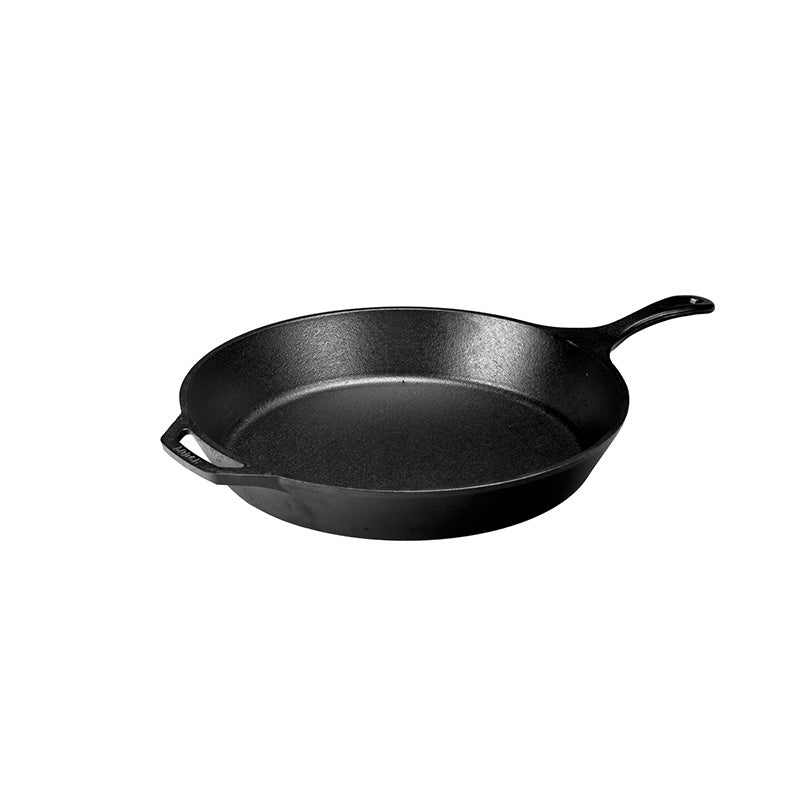
Lodge cast iron is exactly two things: a bare cast-iron body and a baked-on layer of polymerized vegetable oil called seasoning.
There is no coating here in the non-stick sense. A Lodge skillet is cast from iron, then seasoned at the foundry with vegetable oil baked on until it polymerizes into a hard, slick, naturally non-stick layer. That is the entire recipe: iron plus oil. Nothing is sprayed on that can flake into food.
Lodge makes its classic cast iron in South Pittsburg, Tennessee, and ships it pre-seasoned and ready to use, in skillets, Dutch ovens, griddles and more, at prices far below premium cookware. With use, the seasoning improves, so the surface becomes more non-stick over time rather than less.
The appeal for non-toxic shoppers is simple: it is one of the few pans whose full material list you can state in a sentence. The trade-offs, covered below, are the maintenance and the way iron interacts with food.
Lodge at a glance
Bare cast iron is about as simple as cookware chemistry gets. With no non-stick layer, there is no PTFE, PFOA or PFAS to shed, so the whole category of concern the EPA and NIH/NIEHS track is absent by nature, not by reformulation. The FDA recognizes cast iron as a traditional food-contact material.
The seasoning is just vegetable oil, a soy-based oil in Lodge's case, baked until it polymerizes into an inert, food-safe surface. There is no synthetic coating and no proprietary formula to disclose, which is why cast iron does not carry the wear-out or ingredient-transparency questions that coated pans do.
"Non-toxic" is unregulated, but here the claim is unusually easy to support because you can name every material. The two honest caveats are not about coatings at all: cast iron adds some dietary iron to food, and it reacts with acidic dishes. Both are covered below.
Bare cast iron: what it is & what it isn't
Informational only, not medical advice. We describe what the maker and regulators disclose, we do not diagnose or make safety guarantees.
See today's Lodge price
Coating-free, PFAS-free cast iron at the best value in cookware · a commission never changes our verdict
Cast iron is the most durable cookware you can buy, and also the most demanding on habits. Kept seasoned and dry, a Lodge skillet is effectively permanent and gets better with age. Neglected and left wet, it rusts. The care is not hard, it is just non-negotiable.
The routine: cook with some fat, wash with hot water and a brush or minimal soap, dry it immediately and thoroughly, then wipe a thin film of oil over the surface. Avoid soaking, the dishwasher, and long simmers of acidic foods, which can dull or strip the seasoning. Rust that does appear can be scrubbed off and the pan re-seasoned, so damage is rarely permanent.
Lodge ships its cast iron pre-seasoned so it is ready to cook on out of the box. The factory seasoning is 100% vegetable oil, soy-based, sprayed on and baked until it polymerizes into a hard, inert layer bonded to the iron. There is no wax, no synthetic sealant and no PFAS involved.
Because the seasoning is a polymerized food oil rather than a coating, it is part of how you maintain the pan rather than something that wears out for good. Thin spots simply get re-seasoned. For anyone with a severe soy allergy the concern is negligible once the oil is fully polymerized, but it is worth knowing the base oil is soy-derived.
Yes, and for most people that is a minor positive. Cooking in cast iron transfers a small amount of dietary iron into food, more so with acidic dishes like tomato sauce and with longer cook times. For many people, especially those prone to low iron, that is a mild benefit rather than a hazard.
The exception is anyone who must limit iron intake, most notably people with hemochromatosis or other iron-overload conditions, who should be cautious with cast iron and follow medical advice. This is informational, not medical guidance. The iron that transfers is dietary iron, not a coating contaminant, so it is a nutrition question rather than a toxicity one.
We do not cook on the pans, so we synthesize aggregated verified-owner reviews. The praise is remarkably consistent across years: unbeatable value, excellent heat retention and searing, a surface that becomes more non-stick with use, and pans passed down or used daily for decades.
The complaints are the flip side of bare iron: the weight, the seasoning learning curve, rust if left wet, and a rougher cast surface than boutique brands that machine their pans smooth. Owners who learn the care routine almost uniformly stop complaining, which is why cast iron has such loyal users.
Two terms matter most. Seasoning is polymerized oil, not a spice or a coating, and it is what makes cast iron non-stick and rust-resistant. Reactive means the bare iron interacts with acidic foods, which can strip seasoning and lend a metallic taste, so save long tomato or citrus simmers for stainless or enamel.
The materials to screen out in cookware, PFAS non-stick and lead or cadmium in glazes, are simply not present in bare cast iron; there is no coating and no glaze. The EPA concern around fluoropolymers does not apply. That material simplicity is exactly why bare cast iron is one of the most defensible non-toxic surfaces, with maintenance, not chemistry, as the trade-off.
This Lodge cast iron review is research-based, not hands-on. We did not sear, season or rust-test any pan. We synthesized Lodge's published material and seasoning information, FDA and EPA context on food-contact materials and PFAS, peer-reviewed research on iron transfer from cast iron, and aggregated verified-owner reviews, with a primary source cited for each safety point.
What we cannot verify: exactly how much iron a given dish absorbs, since that varies by food, acidity and cook time, and how quickly your specific pan builds seasoning. On price, Lodge is the value benchmark of coating-free cookware, which is why we recommend it to anyone who wants a defensible non-toxic pan without spending on a premium name.
Bare cast iron is the value champion, but two related options suit different needs:
The questions shoppers ask most, with hedged, cited answers.
Every safety statement in this review links to a primary or authoritative source:
Informational only, not medical advice. This review translates what the maker and regulators report. It does not diagnose, treat, or guarantee safety. Consult a qualified professional for medical guidance.
Lodge is the value benchmark for coating-free, PFAS-free cookware, worth it if you accept the seasoning and rust care. Want zero maintenance? Stainless or enameled cast iron is the move.