NTKCEST · 2026
The 2026 Roundup · 6 picks · bare & enameled cast iron

Best Non-Toxic Cast
Iron Cookware of 2026

The best non-toxic cast iron cookware is coating-free by nature: seasoned bare iron or fused-glass enamel, with no fluoropolymer surface to wear off or leach. "Non-toxic" is not a regulated term, so we ignore the label and read the material. We rank bare cast iron and documented enameled cast iron first, because both remove synthetic non-stick from the equation entirely, then sort by weight, finish and price.

EPA·FDA·Prop 65·NIH·Every claim cited
SWritten by Skyler, Founder & Editor · Last updated Sep 2026
6cast iron pieces researched
5authoritative sources cited
2non-toxic finishes compared
$–$$$$every budget covered

Key Takeaways

  • With non-toxic cast iron cookware, the iron is inert and simple. The only questions are the seasoning on bare iron and the enamel on the enameled pieces.
  • Our top pick is Lodge: The coating-free workhorse: inexpensive, near-indestructible, and it can last generations.
  • Fewest open questions
  • Non-Toxic Kitchen Co. ranks every cast iron cookware by material science and disclosed evidence, not marketing claims, with each safety point cited. Compare safer picks in our guide.
Disclosure: Some links are affiliate links. If you buy through one we may earn a commission at no extra cost to you, and it never changes our evidence-based rankings. Full affiliate disclosure →

01What Non-Toxic Cast Iron Cookware Actually Means

With non-toxic cast iron cookware, the iron is inert and simple. The only questions are the seasoning on bare iron and the enamel on the enameled pieces.

The best non-toxic cast iron cookware is coating-free from the start. Bare cast iron is just iron, seasoned with polymerized oil rather than a synthetic layer, and enameled cast iron wraps that iron in a fused-glass surface. Neither uses a fluoropolymer non-stick coating, which is why cast iron is PFAS-free by nature. "Non-toxic" is not a regulated term, so on a box it means little; the material is what matters.

The chemical most shoppers are trying to avoid is PFAS, the forever-chemical family that includes PTFE (Teflon). The EPA describes it as thousands of compounds, and cast iron carries none of them. The FDA treats iron and polymerized seasoning as stable food-contact materials. The one number worth knowing is iron leaching: cast iron adds a small amount of dietary iron to food, which studies suggest is beneficial for most people, though anyone with iron-overload conditions may want to limit it.

For enameled cast iron, the real question is the glaze, not the iron. Independent testing has flagged elevated lead or cadmium in some cheap, brightly colored imported enamels, a concern regulated in California under Proposition 65, so a maker that documents its enamel compliance is the safer path. Bare cast iron is also reactive with acidic foods until well seasoned, while enamel handles acid freely. Every pick below is coating-free, and we note whether it ships pre-seasoned or bare.

02 · METHOD

How we researched
and vetted these picks

We do not run a test kitchen or a lab. Rankings are a transparent synthesis of what makers disclose and what regulators say, and we flag what the evidence cannot settle.

01

Read the disclosures

We start from manufacturer specifications, published third-party lab reports and certifications, not the marketing page.

02

Cite the science

Every health or safety statement links to the EPA, FDA, Prop 65, NIH or peer-reviewed research.

03

Rank by evidence

Picks are ranked on disclosed chemistry, third-party grade and aggregated verified-owner reviews, never on hands-on cooking or our own lab tests, which we do not do.

03 · AT A GLANCE

All 6 picks compared
by type, finish and oven-safe rating

Ranked by disclosed chemistry and certification. Price tiers are relative; live prices load per pick.

PieceTypeFinishPFAS-freeOven-safePriceCheck price
LodgeBare cast ironSeasoned (no coating)InherentVery high$View →
StargazerBare cast ironSmooth, seasonedInherentVery high$$$View →
Field CompanyBare cast ironSmooth, lightweightInherentVery high$$$View →
SmitheyBare cast ironPolished, seasonedInherentVery high$$$View →
Le CreusetEnameled cast ironGlass enamel (no PFAS)InherentHigh$$$$View →
StaubEnameled cast ironMatte enamel (no PFAS)InherentHigh$$$$View →

Summary for comparison, disclosures and prices are cited and loaded per product on the final build.

THE PICKS · RANKED

Coating-free cast iron,
bare and enameled

Every piece here is coating-free: bare cast iron seasoned with oil, or cast iron sealed in fused-glass enamel. We rank by finish, weight, disclosure and value rather than by any non-stick coating claim, because cast iron does not need one.

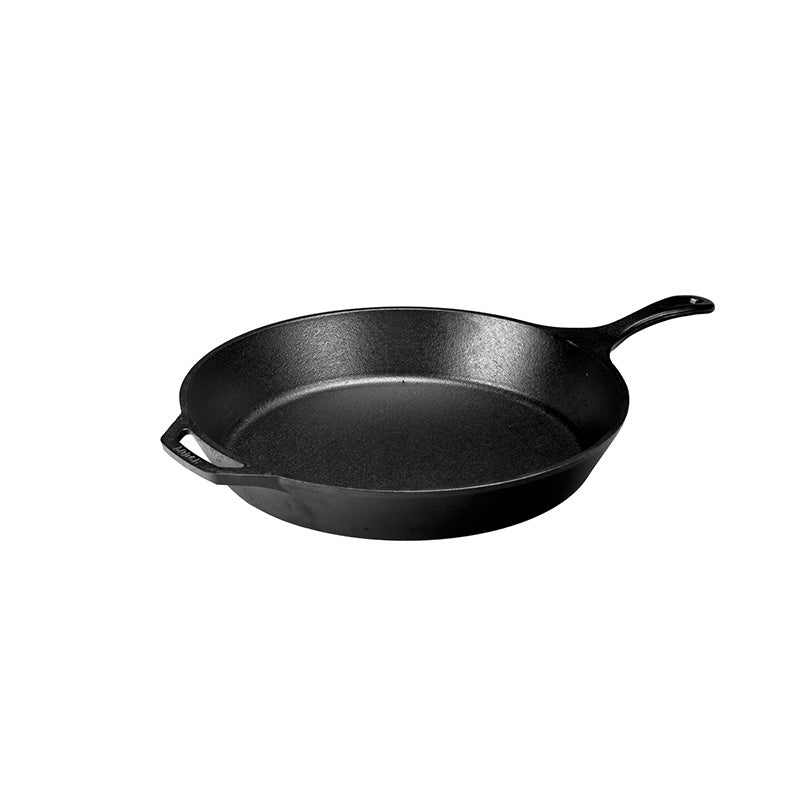
Lodge non-toxic cast iron cookware★ Best overall1

Lodge

Best overall · coating-free bare cast iron

The coating-free workhorse: inexpensive, near-indestructible, and it can last generations.

Best for: searing, high heat and buy-it-once value

Bare cast iron is coating-free by definition, just iron and polymerized oil, with no fluoropolymer and nothing proprietary. Lodge is the value benchmark: seasoned, it is genuinely non-stick, it can outlive its owner, and it adds a small amount of dietary iron that studies note can be meaningful with acidic dishes.

One honest detail matters to strict cooks: Lodge ships pre-seasoned with a vegetable oil (the brand states it uses soybean oil), polymerized during manufacturing and generally considered inert once cured. If you want full control, you can buy it bare or strip and re-season with an oil you choose. Either way there is no synthetic coating, and it is reactive with acid only until the seasoning is well built.

Bare cast ironNo coatingPFAS-free by designVery high heatRe-seasonable

Strengths

  • +Lowest cost, generational lifespan
  • +Excellent heat retention and searing
  • +Season it yourself for full control

Trade-offs

  • –Heavy, needs seasoning upkeep
  • –Pre-seasoned with vegetable oil
  • –Reactive with acidic foods
Typical price$

✓ Ranked first on coating-free chemistry, a commission never changes our pick.
Best premium2

Stargazer

Best premium · smooth-milled, made in USA

A machined-smooth American cast iron skillet that releases food more easily than rough-cast pans.

Best for: cooks who want a smoother surface and domestic manufacturing

Stargazer machines its cooking surface smooth rather than leaving the pebbled texture of budget pans, and it is made in the United States. It is still bare cast iron, coating-free, so the non-stick behavior comes entirely from seasoning. Many users report the smoother surface seasons faster and releases eggs more cleanly.

The manufacturer states its pans are pre-seasoned and free of synthetic coatings, with a lighter, ergonomic design than classic cast iron. The trade-off is price: a domestically made, machined skillet costs several times a basic Lodge. For the same coating-free chemistry with a nicer surface and lighter handling, it is a strong step up.

Bare cast ironSmooth-milledMade in USANo coatingRe-seasonable

Strengths

  • +Smooth surface, easier release
  • +US-made, lighter design
  • +No coating to wear out

Trade-offs

  • –Premium price
  • –Still needs seasoning upkeep
  • –Reactive with acid when young
Typical price$$$

✓ Ranked on coating-free chemistry and disclosed build, not brand shine.

Best lightweight3

Field Company

Best lightweight · thin, smooth cast iron

A lighter, smooth-surfaced cast iron skillet for cooks who find classic pans too heavy.

Best for: anyone who wants cast iron without the full weight

Field Company casts thinner, smoother skillets that weigh noticeably less than traditional cast iron while keeping the same coating-free material. It is bare iron seasoned with oil, so there is no glaze and no synthetic non-stick, and the smoother face helps with release.

The lighter build makes it easier to handle for everyday cooking, though very thin cast iron holds slightly less heat than a heavy skillet for long sears. It is made in the USA and ships pre-seasoned; as with any bare pan, keep it dry and re-season as needed. The chemistry is identical to every other bare cast iron here.

Bare cast ironLightweightSmooth surfaceNo coatingRe-seasonable

Strengths

  • +Much lighter than classic cast iron
  • +Smooth, easy-release surface
  • +Coating-free, US-made

Trade-offs

  • –Premium price
  • –Less heat mass than heavy pans
  • –Still needs seasoning care
Typical price$$$

✓ Ranked on coating-free chemistry, chosen for handling not hype.

Bare or enameled cast iron?

Our cookware hub explains seasoned bare cast iron versus documented enamel in plain English, then points you to the right piece.

Compare cast iron options →
Best heirloom4

Smithey

Best heirloom · polished cast iron

A polished, heirloom-grade American cast iron skillet built to be handed down.

Best for: buyers who want a showpiece coating-free skillet

Smithey hand-finishes its cast iron to a polished interior, splitting the difference between a vintage smooth pan and a modern casting. It is bare iron, coating-free, and pre-seasoned, so the surface is polymerized oil rather than any synthetic layer. The polish makes for quick release once the seasoning is established.

It sits at a premium price like other heirloom makers, and it is a heavier, substantial pan. For strict non-toxic cooks the appeal is simple: a beautifully made, fully coating-free skillet with a surface many prefer to rough-cast iron, and the same generational lifespan. Season it, keep it dry, and it will last.

Bare cast ironPolished surfaceMade in USANo coatingRe-seasonable

Strengths

  • +Polished, heirloom-grade finish
  • +Coating-free, US-made
  • +Generational lifespan

Trade-offs

  • –Premium price
  • –Heavy pan
  • –Needs seasoning upkeep
Typical price$$$

✓ Ranked on coating-free chemistry and disclosed finish, not brand shine.

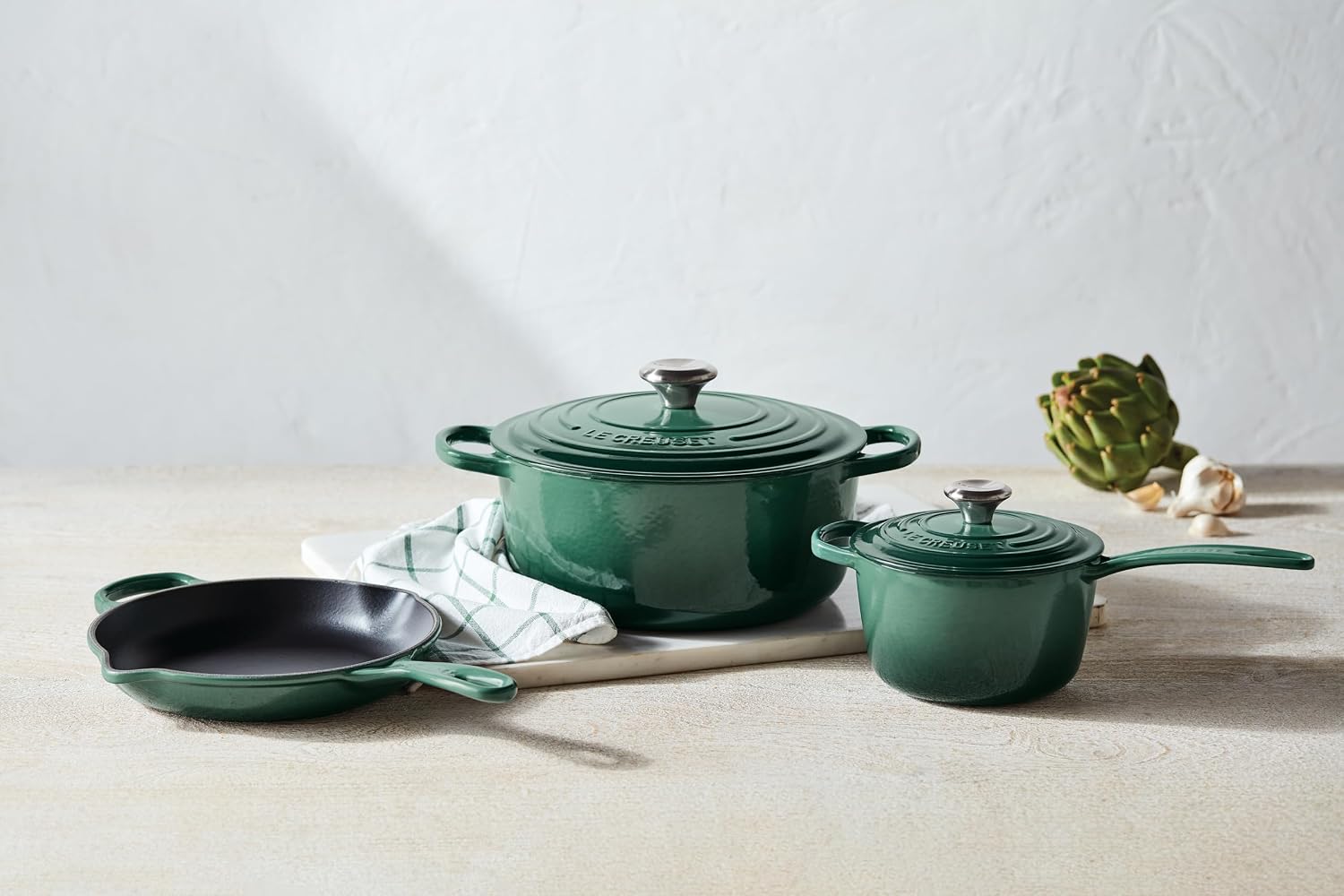
Le Creuset non-toxic cast iron cookwareBest enameled5

Le Creuset

Best enameled · acid-safe, lead/cadmium disclosed

Enameled cast iron that braises what bare iron cannot, with documented heavy-metal compliance.

Best for: acidic braises, sauces and stovetop-to-oven cooking

Le Creuset wraps cast iron in a fused-glass enamel rather than a synthetic coating, so it contains no PFAS, needs no seasoning, and handles the acidic braises and sauces bare cast iron struggles with. The brand publishes that its enamels meet United States and California limits for lead and cadmium, which is exactly the disclosure this category needs, and the Proposition 65 framework is the reason it matters.

Buy carefully, because independent testing has flagged elevated heavy metals in cheap, brightly colored imported enamels, so a maker that documents its glaze is the safer path. The honest trade-offs are price and weight: it is expensive and heavy, and the enamel can chip if dropped. For a do-everything enameled piece with real disclosure, it is the benchmark.

Enameled cast ironGlass enamel (no PFAS)Lead/cadmium disclosedNo seasoningAcid-safe

Strengths

  • +Braises, sauces and searing
  • +No seasoning, easy to clean
  • +Documented heavy-metal compliance

Trade-offs

  • –Premium price, heavy pieces
  • –Enamel can chip if dropped
  • –Cheap imported enamels can leach
Typical price$$$$

✓ Independent pick, we may earn a commission, never at extra cost to you.

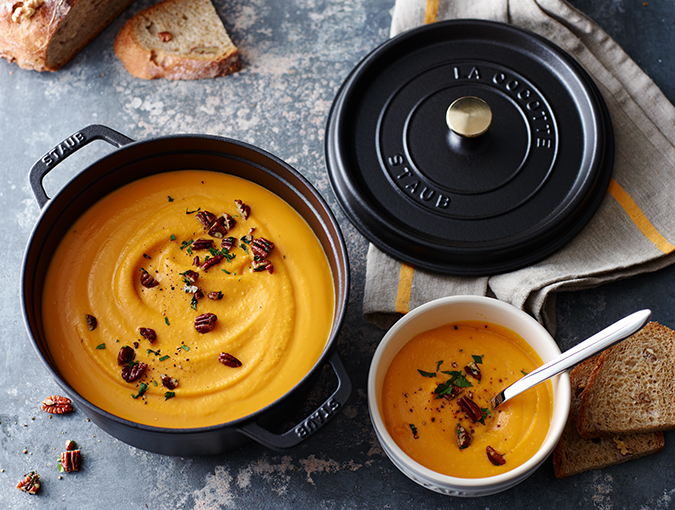
Staub non-toxic cast iron cookwareBest for braising6

Staub

Best enameled braiser · matte black interior

A specialist enameled cocotte with a matte interior many cooks prefer for searing before a braise.

Best for: one standout Dutch oven or braiser, not a full set

Where Le Creuset covers a broad enameled range, Staub is the specialist braiser: a cast-iron cocotte with a rougher matte-black interior enamel that many cooks favor for searing before a long braise. It is PFAS-free by construction and documents its enamel compliance with lead and cadmium limits, so it belongs in the coating-free group despite the glaze.

It shares the category caveats of premium price, real weight, and enamel that can chip if dropped. But the disclosed enamel and acid-safe surface make it a genuinely non-toxic workhorse for slow cooking, and the matte interior is a meaningful difference from glossier enamels if you sear often.

Enameled cast ironMatte enamelLead/cadmium disclosedOven-safeSear-friendly

Strengths

  • +Matte enamel sears well
  • +Excellent for braises
  • +Documented enamel compliance

Trade-offs

  • –Premium price, heavy
  • –Enamel can chip if dropped
  • –Fewer open-stock pieces
Typical price$$$$

✓ Ranked on coating-free chemistry and disclosed enamel, not brand shine.

04Chemicals and coatings to avoid in cast iron cookware

What to screen out

Skip any cast iron pan finished with a PTFE or other synthetic non-stick coating, which reintroduces the PFAS family that bare and enameled cast iron naturally avoid; the EPA notes that "PFOA-free" does not mean "PFAS-free." Be wary of cheap, brightly colored imported enamel, where lead or cadmium can appear in the glaze, a concern regulated under Proposition 65. Favor makers that publish enamel compliance, and treat an undisclosed glaze as unknown.

05The safest materials, by current evidence

Fewest open questions

Seasoned bare cast iron carries the least uncertainty: iron plus polymerized oil, with no coating to wear or leach, and the FDA treats it as a stable food-contact material. Enameled cast iron from a maker that documents its lead and cadmium compliance is the next-safest, because the glaze is fused glass, not a synthetic non-stick. Both are PFAS-free by construction.

06How to choose non-toxic cast iron cookware

  • 1Decide bare or enameled. Bare cast iron seasons to a non-stick surface and adds dietary iron; enameled cast iron needs no seasoning and handles acidic braises. Both are coating-free.
  • 2Mind the pre-seasoning. Most bare pans arrive pre-seasoned with a vegetable oil. Once polymerized it is generally inert, but for full control, buy bare or re-season with an oil you choose.
  • 3Demand enamel disclosure. Enamel is glass, not PFAS, but cheap imported glazes have tested high for lead and cadmium. Favor makers that document compliance and check the line's Prop 65 status.
  • 4Match it to your cooking. High-heat searing and everyday frying suit bare cast iron; long tomato or wine braises suit enameled cast iron, which is not reactive with acid.
  • 5Consider the weight. Classic cast iron is heavy. Smooth-milled or lightweight makers cost more but are easier to handle, with the same coating-free chemistry.
  • 6Buy for lifespan. A seasoned or enameled cast iron piece can last for generations, so you are really buying a finish and a build, not a disposable coating.

07What the evidence doesn't settle

How much iron a given pan adds to food varies with the dish, the acidity and the seasoning, so exact dietary iron figures are hard to pin down; studies suggest the amounts are safe and often beneficial, though those with iron-overload conditions may wish to limit bare cast iron. Independent verification of every enamel batch is not possible for us, so we rely on published lead and cadmium disclosures. "Non-toxic" remains an unregulated marketing term, so we rank by material and disclosure and update as better evidence publishes.

FAQ

Frequently Asked Questions About Cast Iron Cookware

The questions shoppers ask most, with hedged, cited answers.

Is cast iron cookware non-toxic?

Bare cast iron is coating-free: iron with a seasoned patina of polymerized oil, and no fluoropolymer surface. Enameled cast iron adds a fused-glass layer, not a synthetic coating. Both are PFAS-free by nature, which is why cast iron is among the more defensible non-toxic materials.

Does cast iron leach iron into food, and is that safe?

Yes, cast iron adds a small amount of dietary iron, more with acidic foods and longer cooking. Studies suggest this is safe and often beneficial for most people. Anyone with an iron-overload condition such as hemochromatosis may want to limit it or choose enameled cast iron.

Is enameled cast iron non-toxic and lead-free?

The enamel is fused glass, not PFAS. The concern is lead or cadmium in cheap, brightly colored imported glazes. Choose a maker that publishes compliance with United States and California limits, and the enamel is considered stable for cooking.

Is Lodge cast iron safe and made without PFAS?

Lodge bare cast iron has no PFAS coating; it is seasoned with soybean oil that polymerizes during manufacturing and is generally considered inert once cured. If you prefer, you can buy bare or re-season with an oil you choose.

Can you cook acidic foods in cast iron?

In bare cast iron, long simmers of tomato, wine or vinegar can strip a young seasoning and add a metallic taste, so use a well-seasoned pan or keep acidic cooking brief. Enameled cast iron handles acidic braises freely because the glaze is non-reactive.

How do you season cast iron with a non-toxic oil?

Apply a very thin layer of a high-smoke-point oil such as grapeseed or flaxseed, wipe off the excess, and heat until it polymerizes. Repeat several times. Because you choose the oil, you control exactly what forms the surface.

Is vintage cast iron safe?

Vintage bare cast iron is generally considered safe once cleaned and re-seasoned, and many prefer its smooth surface. Avoid vintage enameled pieces with unknown glazes, since older or imported enamels can contain lead or cadmium.
S

Skyler, Founder & Editor

I started Non-Toxic Kitchen Co. to cut through vague "non-toxic" labels by organizing what authoritative sources actually say. These rankings are research syntheses of manufacturer specs, third-party lab reports and aggregated verified-owner reviews, not hands-on cooking or our own lab tests, and every safety claim is cited. Read our full methodology →

08Sources & further reading

Every safety statement on this page links to a primary or authoritative source. The bodies we rely on most:

Informational only, not medical advice. This guide translates what regulators and peer-reviewed research report. It does not diagnose, treat, or make safety guarantees. Consult a qualified professional for medical guidance.

Ready to cook coating-free?

Start with our overall bare cast iron pick for a coating-free surface on a budget, or step up to documented enameled cast iron for acidic braises without seasoning.

See the No. 1 cast iron pick → Back to the cookware hub →