NTKCEST · 2026
In-Depth Review · 5-ply stainless clad

Made In Cookware Review

This Made In cookware review answers the question shoppers keep asking: is Made In really non-toxic, and is the stainless worth it? The core line is bare, five-ply stainless clad with no coating to wear off, and Made In is one of the few makers that publishes third-party PFAS lab testing (via Light Labs) to back its claims. This is a research-based review, not hands-on cooking. We synthesize the maker's published specs and lab summaries, material science, and aggregated verified-owner reviews, with every safety claim cited, and we cover the separate CeramiClad, carbon steel and enameled cast iron lines too.
EPA·FDA·Prop 65·Every claim cited
SWritten by Skyler, Founder & Editor · Research-based, not hands-on · Last updated Sep 2026
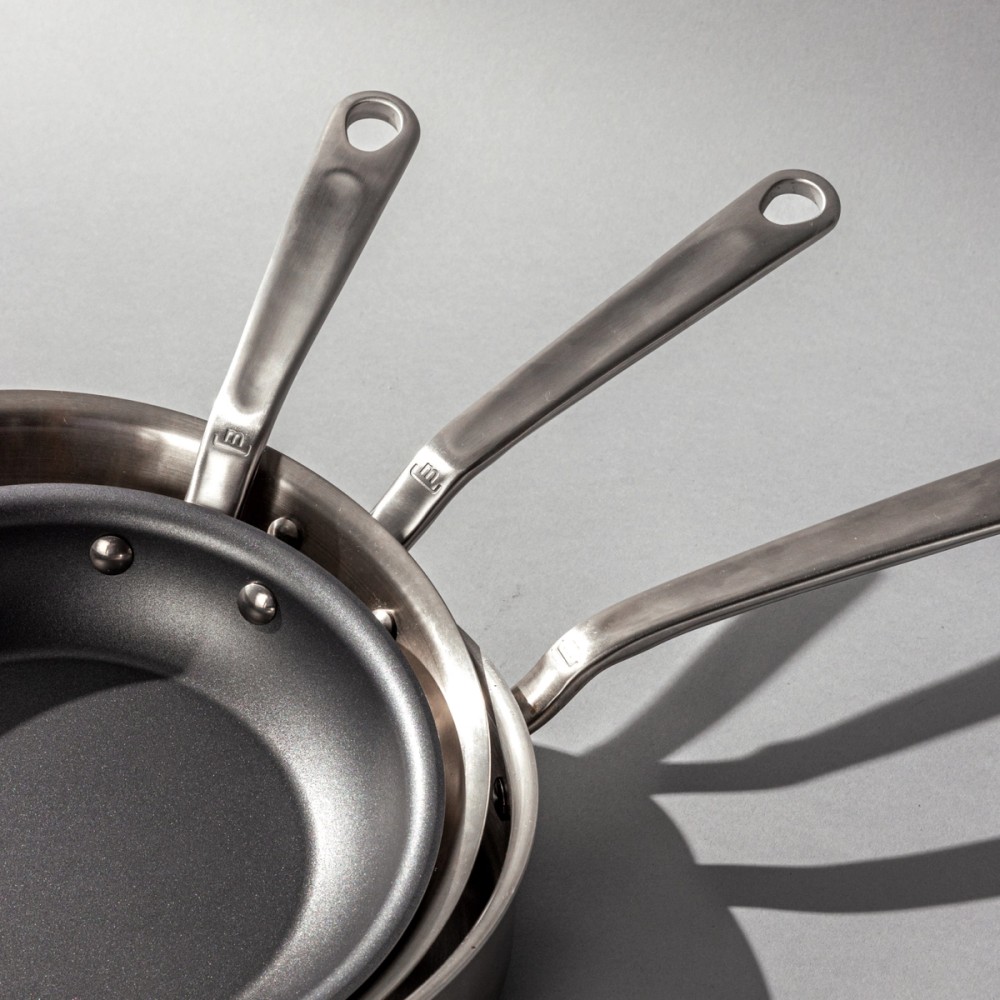
Made In 5-ply stainless clad frying pan
Our verdict at a glance★ Best value clad
Non-toxic disclosureStrong · lab-tested
Everyday durabilityStrong · decades
Everyday easeModerate · learning curve
Long-term valueStrong
Typical price$$$Check price →

✓ Research-based rating, a commission never changes our verdict.

5-plystainless clad construction
30PFAS compounds below detection (Light Labs)
~800°Fstainless oven-safe limit
Lifelimited lifetime warranty

The verdict, in one line

A coating-free stainless system with rare published PFAS testing, at a friendlier price than the old guard.

Made In's stainless clad is a top coating-free choice: bare 18/10 steel with no non-stick layer to fail, backed by third-party Light Labs testing that reports all 30 screened PFAS compounds below detection and no BPA, BPS or BPF. The honest caveats are the same as any stainless, a learning curve and trace nickel, plus the fact that Made In's separate CeramiClad line is a coating and therefore a wear item. If you want lab-backed stainless at a mid-premium price, this is the value pick of the category.

Key Takeaways

  • The made in cookware is a coating-free stainless system with rare published PFAS testing, at a friendlier price than the old guard.
  • Coating-free 18/10 stainless, backed by published Light Labs PFAS testing
  • Five-ply construction with even heat, oven-safe to about 800°F
  • Non-Toxic Kitchen Co. ranks every made in cookware by material science and disclosed evidence, not marketing claims, with each safety point cited. Compare safer picks in our guide.
Disclosure: Some links are affiliate links. If you buy through one we may earn a commission at no extra cost to you, and it never changes our evidence-based verdict. Full affiliate disclosure →

01Made In cookware review: collections, origin and price

Made In is a direct-to-consumer maker whose flagship is five-ply stainless clad, alongside ceramic non-stick, carbon steel and enameled cast iron lines.

The range is broader than the stainless it is known for. Stainless Clad is the flagship, a five-ply build with three aluminum layers sandwiched between two stainless layers for even heat. CeramiClad is a PFAS-free ceramic non-stick, Carbon Steel is a seasonable pan for high-heat searing, and the Enameled Cast Iron line uses a glass enamel finish. Each material has a different safety story, so "is Made In non-toxic" genuinely depends on the line.

Origin varies by line, which Made In discloses. The stainless and non-stick are made in Italy, while the carbon steel, copper and enameled cast iron are made in France. The food-contact surface on the stainless is 18/10 (about 18 percent chromium, 10 percent nickel), the same non-reactive alloy the premium clad makers use, chosen because it is hard and does not react with food.

On price, Made In sits a tier below the most expensive American clad while offering comparable five-ply construction, which is the heart of its value pitch. We describe price only in tiers, so think of the stainless as a $$$ purchase: a real premium over a coated set, but less than the category's top name, with the same coating-free longevity.

Made In stainless at a glance

Cooking surface18/10 stainless steel
Construction5-ply stainless clad (aluminum core)
CoatingNone (bare stainless)
PFAS / PTFEBelow detection (Light Labs)
Oven-safe~800°F (stainless)
InductionYes
OriginItaly (stainless) · France (others)
WarrantyLimited lifetime

02Is Made In non-toxic? PFAS, PTFE and the Light Labs testing

"Non-toxic" is an unregulated marketing term, so the useful question is what Made In actually discloses. For the stainless line the answer is strong: it is bare 18/10 stainless with no coating, so there is no PTFE or other PFAS on the cooking surface, and Made In publishes third-party Light Labs testing reporting all 30 screened PFAS compounds below detection and no BPA, BPS or BPF. The EPA describes PFAS as a family of thousands of compounds, so a coating-free pan plus published testing is about as reassuring as this category gets. The FDA also recognizes stainless as a safe food-contact material.

The honest caveats are material, not marketing. Bare 18/10 stainless contains nickel, and new pans can release trace nickel and chromium during long, acidic cooking; peer-reviewed studies find the amounts small and decreasing with use, but stainless is not for a severe nickel allergy. The NIEHS keeps a plain-language PFAS overview if you want the background, and Proposition 65 (lead and cadmium) is relevant mainly to the enameled cast iron colorants rather than to bare steel. We describe what is disclosed; we do not issue a blanket safety guarantee.

Made In stainless: what it is & what it isn't

What it is

  • ✓Bare five-ply 18/10 stainless over an aluminum core
  • ✓Coating-free, with no PTFE or other PFAS on the surface
  • ✓Backed by published Light Labs PFAS and bisphenol testing
  • ✓Effectively permanent, with decades of expected life

What it isn't

  • ✕Nickel-free (new pans can shed trace nickel and chromium)
  • ✕Naturally non-stick (it rewards preheating and a little fat)
  • ✕The same as the CeramiClad line, which is a coating
  • ✕A government-verified guarantee that it is risk-free

Informational only, not medical advice. We describe what the maker and regulators disclose, we do not diagnose or make safety guarantees.

See today's Made In price

Lab-tested, coating-free stainless clad · a commission never changes our verdict

Check price →

03Made In Stainless Clad: 5-ply, 18/10 and the nickel question

The stainless flagship is five-ply: three aluminum layers between two stainless layers, so the conductive metal runs edge to edge for even heat rather than sitting in a base disc. The food-contact surface is 18/10 stainless, the hard, non-reactive alloy used across premium clad. There is no coating anywhere on the cooking surface, which is exactly why it is a coating-free, long-lived pan.

The one genuine question is nickel. Because 18/10 contains nickel, a small amount can migrate, most when you simmer acidic food for a long time in a brand-new pan, and the amount typically falls as the passive chromium-oxide layer stabilizes with use. For most people this is not a practical concern and regulators treat stainless as a standard food-contact metal. If you have a diagnosed nickel sensitivity, no stainless is nickel-free, and a coating-free alternative like seasoned cast iron may suit you better.

04Made In CeramiClad: the PFAS-free non-stick, explained

CeramiClad is Made In's answer to easy release without fluoropolymers. It is a sol-gel ceramic style coating that the maker states is made without PFAS, PFOA or PTFE, bonded over a clad base, and rated oven-safe to roughly 550°F. That makes it a reasonable coated option for eggs and delicate foods, and the FDA permits such coatings for food contact.

The trade-off is the one every coated pan shares. A ceramic coating is a wear item: its non-stick release fades over a few years of regular use, faster with high heat, cooking spray or metal utensils. So CeramiClad is a convenience surface you should plan to replace, not a lifetime pan, and it sits below the bare stainless in long-term value. If your priority is the most defensible non-toxic choice, buy the stainless; if you want one easy-release pan, CeramiClad is a transparent option.

05Made In carbon steel and enameled cast iron: safety notes

Two more coating-free materials round out the range. Carbon steel behaves like a lighter cast iron: it is bare metal that you season with polymerized oil to build a natural non-stick patina, it takes very high heat (oven-safe to around 1,200°F), and there is no synthetic coating to fail. It rewards the same care as cast iron, dry it well and re-oil it, and it lasts indefinitely.

The enameled cast iron line uses a vitreous enamel (glass) coating fused to iron, which is inert and easy to clean and needs no seasoning. Enamel is the one place Proposition 65 lead and cadmium checks genuinely apply, because those metals can appear in ceramic colorants, so reputable makers formulate to meet the limits. Both materials are strong non-toxic choices; carbon steel for high-heat searing, enameled cast iron for braises and sauces.

06Heat, induction and oven-safe limits by line

Because Made In spans several materials, the limits differ by line. Stainless is oven-safe to about 800°F and works on every stovetop including induction. Carbon steel tolerates the highest heat, roughly 1,200°F, and is also induction-compatible. CeramiClad is the most heat-sensitive at around 550°F, because high heat shortens any coating's life, and enameled cast iron sits near 580°F. Copper pieces are the exception that is not induction-compatible.

The practical rule follows the material, not the brand. Reserve high-heat searing for the stainless and carbon steel, keep the ceramic on low-to-medium heat with gentle utensils, and use the enameled cast iron for gentler oven and stovetop cooking. Most stainless pieces are dishwasher-safe, though hand-washing keeps them brighter; the coated and seasoned pieces prefer hand-washing.

07Pros & cons

Strengths

  • +Coating-free 18/10 stainless, backed by published Light Labs PFAS testing
  • +Five-ply construction with even heat, oven-safe to about 800°F
  • +Mid-premium price, generally below the top American clad brand
  • +Broad range, stainless, carbon steel and enameled cast iron all coating-free

Trade-offs

  • –Bare stainless has a learning curve and is not naturally non-stick
  • –New pans can shed trace nickel and chromium with acidic foods
  • –CeramiClad is a coating and a wear item, not a lifetime surface
  • –Still a premium purchase versus a basic coated set

08What verified owners report

Aggregated verified-owner reviews track closely with the specs. Stainless owners praise the even heating, the heft-to-price ratio versus the premium American brand, and pans that hold up over years of frequent use. The recurring complaint is the stainless learning curve: people expecting non-stick behavior from bare metal report sticking until they adjust heat and fat. A minority mention discoloration from hard water or acidic foods, which is cosmetic and polishes out.

For CeramiClad, owner sentiment mirrors the whole ceramic category: excellent release when new, with release fading over time, which is the expected behavior of a coating rather than a defect. Carbon steel owners emphasize the payoff of seasoning patience, and enameled cast iron reviews focus on easy cleanup. Across lines, the durability winners are the coating-free materials, exactly as the material science predicts.

09Stainless and coating terms explained

A little vocabulary settles most confusion. 18/10 and 18/0 describe the chromium and nickel in stainless; 18/10 is the food-contact interior. Clad (here five-ply) means the conductive core runs through the whole pan, not just the base. PFAS is the EPA umbrella for thousands of fluorinated compounds, and PTFE (classic Teflon-style non-stick) is one of them, which is why "PTFE-free" does not automatically mean "PFAS-free" unless testing backs it.

Sol-gel ceramic (Made In's CeramiClad) is a silica-derived coating, distinct from PTFE and from bare metal. Seasoning is the polymerized-oil patina on carbon steel and bare cast iron, and vitreous enamel is the glass coating on enameled cast iron. Coating-free materials, stainless, carbon steel and bare cast iron, share one advantage: there is no release layer to wear off.

10How we researched this Made In cookware review

This review is research synthesis, not a cooking diary. We compared Made In's published specifications and its Light Labs third-party test summaries, material-science literature on stainless and ceramic coatings, regulatory guidance from the FDA and EPA, and aggregated verified-owner reviews. We did not sear, simmer or run our own lab tests, and we state that plainly so you can weigh the evidence yourself.

What we cannot verify without hands-on testing is worth naming: exact nickel migration for a given pan and recipe, precise CeramiClad lifespan, and real-world induction response are all things owner reports describe better than a spec sheet. The Light Labs figures come from Made In's published summaries rather than our own lab, so we represent them as disclosed. Where the evidence is thin we hedge, and we update the page when materials or testing change.

12Who it's for, and who should skip it

Buy it if you…

  • ✓Want coating-free stainless with rare published PFAS lab testing
  • ✓Like the idea of premium five-ply at a friendlier price
  • ✓Are happy to preheat and use a little fat for release
  • ✓Want one brand covering stainless, carbon steel and enameled cast iron
  • ✓Cook on induction or want oven-safe searing
Check price →
FAQ

Frequently Asked Questions About Made In Cookware

The questions shoppers ask most, with hedged, cited answers.

Is Made In cookware non-toxic?

For the stainless line the disclosure is strong: it is bare 18/10 steel with no coating, and Made In publishes Light Labs testing reporting all 30 screened PFAS compounds below detection and no BPA, BPS or BPF. "Non-toxic" has no legal definition, so we describe what is disclosed rather than guarantee safety, and we note stainless can shed trace nickel with long acidic cooking. The coated CeramiClad line is a separate, finite surface.

Does Made In cookware contain PFAS or PTFE?

The stainless line has no coating and, per Made In's published Light Labs testing, no detectable PFAS. CeramiClad is a ceramic non-stick the maker states is made without PFAS, PFOA or PTFE. So the stainless is coating-free and the ceramic is marketed PFAS-free; neither uses conventional PTFE.

Is Made In stainless steel safe (nickel)?

18/10 stainless is a standard, non-reactive food-contact metal, but it contains nickel, and new pans can release small amounts during long acidic cooking that decrease with use. Most people are unaffected; anyone with a diagnosed nickel sensitivity should know stainless is not nickel-free.

Where is Made In cookware made?

Made In discloses origin by line: the stainless and non-stick are made in Italy, while the carbon steel, copper and enameled cast iron are made in France. Origin can change by SKU, so check the specific product listing.

Is Made In oven-safe and induction-compatible?

Yes, with limits by line: stainless is oven-safe to about 800°F, carbon steel to about 1,200°F, CeramiClad to about 550°F, and enameled cast iron near 580°F. Stainless and carbon steel work on induction; copper does not.

Is Made In CeramiClad PFAS-free?

Made In states CeramiClad is made without PFAS, PFOA or PTFE. "PFAS-free" is an unregulated claim, so treat it as a maker disclosure rather than a guarantee, and remember it is still a coating that wears over a few years.

Is Made In worth it compared to All-Clad?

Made In offers comparable five-ply stainless at a generally lower price, which is its core value pitch, and it adds published PFAS testing. All-Clad is made in the USA and has the longer track record. Both are coating-free and long-lived; the choice is price versus pedigree.

Is Made In dishwasher safe?

Most stainless pieces are dishwasher-safe, though hand-washing keeps them brighter. The CeramiClad, carbon steel and enameled cast iron pieces prefer hand-washing to protect the coating or seasoning.
S

Skyler, Founder & Editor

I review products by organizing what manufacturers actually disclose and what authoritative sources say, not hands-on cooking or our own lab tests. This review synthesizes published test summaries, material science and aggregated verified-owner reviews, with every safety claim cited. Read our full methodology →

Sources & further reading

Every safety statement in this review links to a primary or authoritative source:

Informational only, not medical advice. This review translates what the maker and regulators report. It does not diagnose, treat, or guarantee safety. Consult a qualified professional for medical guidance.

Ready to decide?

Made In's stainless is the lab-tested, coating-free value pick, worth it if you want premium clad without the top-tier price and will learn to preheat. Want to see it against the whole field?

Check price → See coating-free picks →