NTKCEST · 2026
The 2026 Roundup · 3 picks · PFAS-free & Teflon-free

Best Non-Toxic
Nonstick Pans
of 2026

The best non-toxic nonstick pan is not one product but a spectrum, and "non-toxic" is not a regulated term, so we read the material instead of the label. The most defensible options are coating-free and naturally non-stick, seasoned carbon steel and cast iron, plus solid ceramic. If you want a true coating, a PFAS-free sol-gel ceramic is the way, ranked honestly below the coating-free picks and never PTFE.

EPA·FDA·NIH·Prop 65·Every claim cited
SWritten by Skyler, Founder & Editor · Last updated Sep 2026
3non-stick pans researched
5authoritative sources cited
0PTFE top picks
$–$$$every budget covered

Key Takeaways

  • Non-toxic non-stick is a spectrum, from coating-free surfaces you season to PFAS-free coatings you eventually replace. The label alone tells you almost nothing.
  • Our top pick is De Buyer Mineral B: The chef answer to non-stick: seasons to a slick surface with no coating to scratch or wear out.
  • Fewest open questions
  • Non-Toxic Kitchen Co. ranks every nonstick pan by material science and disclosed evidence, not marketing claims, with each safety point cited. Compare safer picks in our guide.
Disclosure: Some links are affiliate links. If you buy through one we may earn a commission at no extra cost to you, and it never changes our evidence-based rankings. Full affiliate disclosure →

01What a Non-Toxic Nonstick Pan Actually Is (a Spectrum, Not a Label)

Non-toxic non-stick is a spectrum, from coating-free surfaces you season to PFAS-free coatings you eventually replace. The label alone tells you almost nothing.

A truly non-toxic nonstick pan is less a product than a spectrum, and "non-toxic" is not a regulated term. At one end are coating-free surfaces that are naturally non-stick once seasoned, carbon steel and cast iron, plus solid 100% ceramic. At the other are pans with a PFAS-free sol-gel ceramic coating. What almost no honest guide recommends anymore is PTFE (Teflon). We rank the coating-free options first and the PFAS-free coated options after.

The whole reason shoppers seek a non-toxic non-stick is to avoid PFAS, the forever-chemical family that includes PTFE and, historically, PFOA. The EPA describes PFAS as thousands of compounds, and newer replacements such as GenX are themselves under scrutiny, which is why "PFOA-free" is not the same as "PFAS-free." PTFE is permitted by the FDA for food contact, but its documented concerns are fume release when overheated and coating wear, so we do not rank it as a top pick.

Sol-gel ceramic coatings are the PFAS-free way to get true coating non-stick. They are made from a sand or silica base and contain no fluoropolymers, but they are a wear item: user reviews and material science put their life at roughly one to two years of peak release for budget pans and up to a few years for premium ones. The FDA and the European food-contact standard EC 1935:2004 regulate these materials, but the exact recipes stay proprietary, so we favor makers that publish PFAS-free lab certification.

02 · METHOD

How we researched
and vetted these picks

We do not run a test kitchen or a lab. Rankings are a transparent synthesis of what makers disclose and what regulators say, and we flag what the evidence cannot settle.

01

Read the disclosures

We start from manufacturer specifications, published third-party lab reports and certifications, not the marketing page.

02

Cite the science

Every health or safety statement links to the EPA, FDA, Prop 65, NIH or peer-reviewed research.

03

Rank by evidence

Picks are ranked on disclosed chemistry, third-party grade and aggregated verified-owner reviews, never on hands-on cooking or our own lab tests, which we do not do.

03 · AT A GLANCE

All 3 picks compared
coating-free vs PFAS-free coated, by non-stick type and coating life

Ranked by disclosed chemistry and certification. Price tiers are relative; live prices load per pick.

PanNon-stick typeCoatingPFAS-freeCoating lifePriceCheck price
De BuyerCarbon steel (seasoned)NoneInherentImproves with age$$View →
LodgeCast iron (seasoned)NoneInherentImproves with age$View →
Xtrema100% ceramicNone (solid)InherentN/A (solid)$$$View →

Summary for comparison, disclosures and prices are cited and loaded per product on the final build.

THE PICKS · RANKED

Coating-free non-stick first,
PFAS-free coatings last

We rank by evidence, not marketing: coating-free surfaces that are naturally non-stick lead, because they have nothing to wear or leach, then the PFAS-free sol-gel coatings follow, ranked by how transparent their testing is. No PTFE pan makes the list.

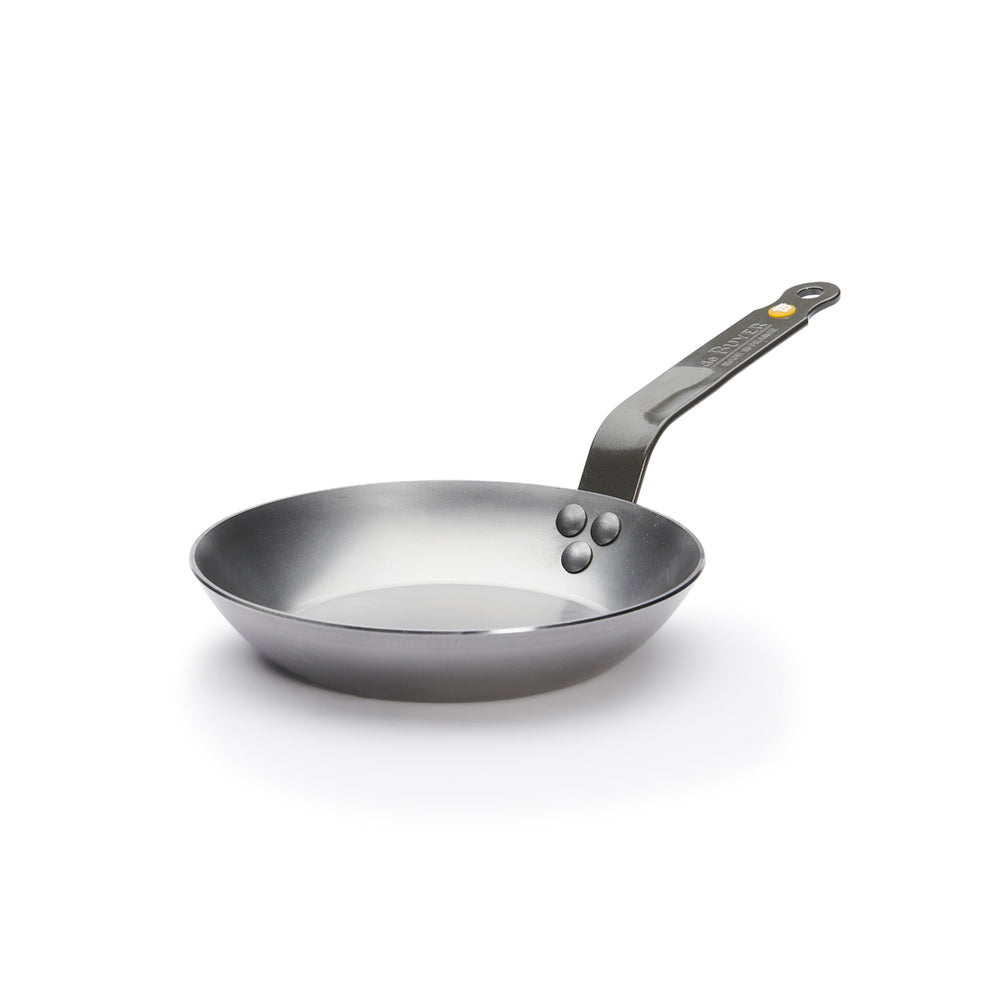
De Buyer Mineral B non-toxic nonstick pan★ Best overall1

De Buyer Mineral B

Best overall · coating-free carbon steel non-stick

The chef answer to non-stick: seasons to a slick surface with no coating to scratch or wear out.

Best for: high-heat cooking and non-stick that lasts for decades

Carbon steel is the restaurant answer to non-stick, and the De Buyer Mineral B is its reference pan. Seasoned, it develops a slick patina that releases eggs and fish like a coated pan, but there is no coating at all, so nothing can scratch off or degrade. It ships with a food-safe beeswax film you wash off, then you season it yourself with an oil you choose.

Because the non-stick comes from seasoning rather than a fluoropolymer, it has no PFAS, no PTFE and no coating lifespan to worry about. The trade-off is upkeep: hand-wash, dry it, and avoid long acidic simmers until the patina is established. For anyone who wants non-stick that improves with age instead of wearing out, it is the most defensible choice, which is why it leads.

Carbon steelNo coatingPFAS-free by designSeasons non-stickVery high heat

Strengths

  • +Non-stick with no coating to wear
  • +Lasts for decades with care
  • +You choose the seasoning oil

Trade-offs

  • –Needs seasoning and hand-washing
  • –Reactive with acid when young
  • –Not dishwasher safe
Typical price$$

✓ Ranked first, coating-free non-stick beats any coating, a commission never changes that.

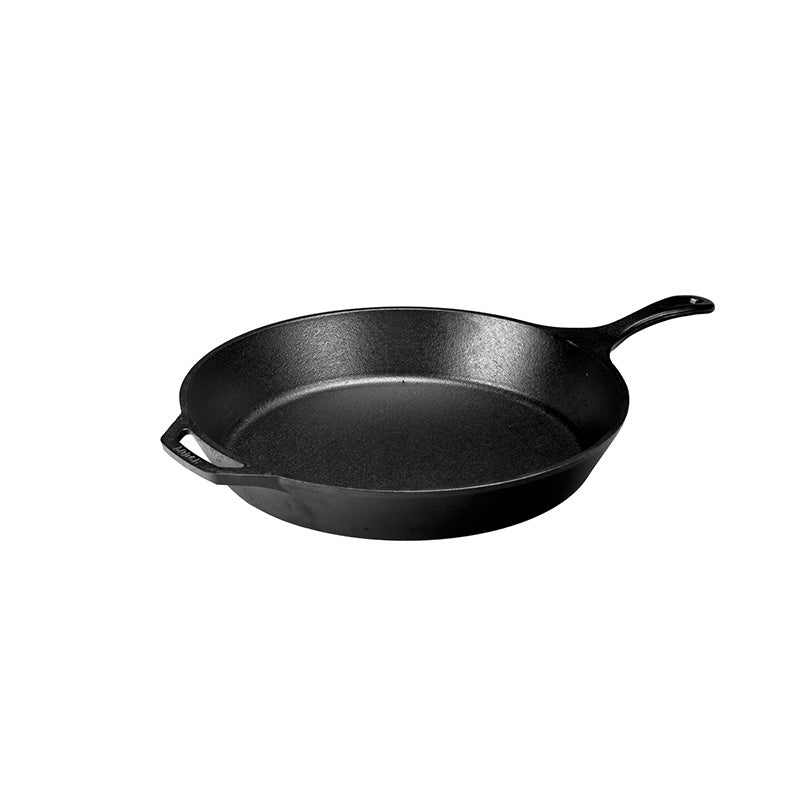
Lodge non-toxic nonstick panBest budget2

Lodge

Best budget · naturally non-stick cast iron

Seasoned cast iron is genuinely non-stick, near-indestructible, and costs little.

Best for: searing and budget non-stick that can last generations

Bare cast iron is the other coating-free non-stick, and Lodge is the value benchmark. Once seasoned, its polymerized-oil patina releases food well, and there is no synthetic coating anywhere. It takes very high heat and can outlive its owner, which no coated pan can claim.

Lodge ships pre-seasoned with soybean oil that polymerizes during manufacturing; if you want full control you can re-season with your own oil. It is heavy and needs to be kept dry, and it is reactive with acidic foods until well seasoned. But as budget non-stick with zero coating, nothing beats it on value or longevity.

Cast ironNo coatingPFAS-free by designSeasons non-stickVery high heat

Strengths

  • +Naturally non-stick, no coating
  • +Lowest cost, generational lifespan
  • +Excellent for searing

Trade-offs

  • –Heavy, needs seasoning upkeep
  • –Pre-seasoned with vegetable oil
  • –Reactive with acidic foods
Typical price$

✓ Ranked on coating-free chemistry, a budget workhorse ranked honestly.

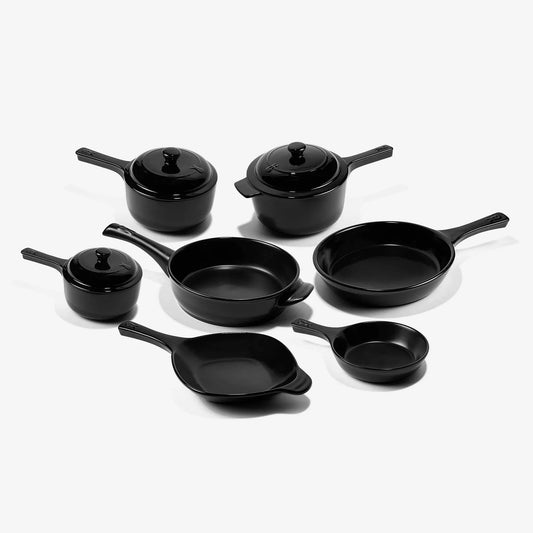
Xtrema non-toxic nonstick panBest coating-free ceramic3

Xtrema

Best coating-free ceramic · solid, non-reactive

Solid 100% ceramic with a naturally slick, non-reactive surface and no coating to fail.

Best for: the coating-averse who want a smooth, inert surface

For non-stick without seasoning or a coating, solid 100% ceramic is the option, and Xtrema is the transparent choice. It is kiln-fired clay all the way through, so there is no sol-gel layer to wear, and the brand publishes third-party PFAS, lead and cadmium testing. The surface is smooth and non-reactive, though it is less slick than a seasoned or coated pan and does best with a little oil.

The honest caveats are that it is brittle and can crack from thermal shock or a drop, and it heats slowly rather than searing. It is not a true drop-in for a coated egg pan, but for a fully inert, coating-free surface that never wears out, it is the safest ceramic non-stick you can buy.

100% ceramicNo coatingThird-party testedNon-reactiveVery high heat

Strengths

  • +Solid ceramic, nothing to wear off
  • +Publishes third-party testing
  • +Inert and non-reactive

Trade-offs

  • –Brittle, thermal-shock risk
  • –Less slick than coated pans
  • –Heats slowly
Typical price$$$

✓ Ranked in the coating-free group because solid ceramic has no coating to fail.

04Chemicals to avoid: PTFE, PFOA and the PFAS-free fine print

What to screen out

Avoid PTFE (Teflon) and any pan that will not disclose whether its coating is PFAS-free; the EPA notes that "PFOA-free" does not mean "PFAS-free," and newer replacements such as GenX are under study. Be skeptical of very cheap "ceramic" pans with undisclosed coating chemistry, where lead or cadmium can also appear, a concern regulated under Proposition 65. And never dry-heat or sear hard on a coated pan; overheating both shortens coating life and, with PTFE, can release fumes. When a coating is undisclosed, treat it as unknown.

05The safest materials, by current evidence

Fewest open questions

The least uncertainty comes from coating-free non-stick: seasoned carbon steel from makers such as De Buyer or Alva, seasoned cast iron, and solid 100% ceramic, none of which has a coating to wear or leach. The FDA treats seasoned steel and iron as stable food-contact surfaces. Fully clad tri-ply or 5-ply stainless is not non-stick but is also coating-free, and a good partner pan. Among coatings, the safest are sol-gel ceramics that publish independent PFAS testing.

06How to make any non-toxic nonstick pan last

  • 1Prefer coating-free non-stick. Seasoned carbon steel, cast iron and solid ceramic have no coating to wear out, so they last far longer than any coated pan. Choose a coating only when you want effortless egg release.
  • 2If coated, demand testing. Pick a sol-gel ceramic that publishes third-party PFAS, lead and cadmium results, and treat undisclosed coatings as unknown.
  • 3Cook low to medium. Overheating is the fastest way to ruin a coating and, with PTFE, to release fumes. Save high heat for coating-free pans.
  • 4Use gentle utensils. Wood or silicone tools and hand-washing extend the life of any coating. Metal utensils and the dishwasher shorten it.
  • 5Season and dry coating-free pans. Carbon steel and cast iron need seasoning and must be dried to avoid rust. That upkeep is what buys their long, coating-free life.
  • 6Keep a stainless partner. Fully clad tri-ply or 5-ply stainless handles searing and acidic dishes that non-stick pans should not, so a two-pan kitchen covers everything without PTFE.

07What we can't verify (honest uncertainty)

Real-world migration from an intact ceramic coating is not well quantified in independent long-term studies, and sol-gel recipes are proprietary, so undisclosed coatings cannot be verified from the outside. Coating-lifespan figures come from owner reports, so they are estimates. Low-dose PFAS health research is still evolving, and "PFAS" is a moving target as GenX and other replacements appear. We rank by disclosure and construction, hedge where the science is thin, and update as better evidence publishes.

FAQ

Frequently Asked Questions About Nonstick Pan

The questions shoppers ask most, with hedged, cited answers.

Are ceramic non-stick pans safe and non-toxic?

Sol-gel ceramic coatings are PFAS-free and generally considered safe when intact, which is their main advantage over PTFE. The honest caveats are that the coating wears in a few years and its exact chemistry is proprietary, so we favor brands that publish third-party PFAS, lead and cadmium testing.

What is the safest non-stick pan without Teflon?

Coating-free options carry the least uncertainty: seasoned carbon steel and cast iron are naturally non-stick with no coating to wear, and solid 100% ceramic is inert. Among coatings, choose a PFAS-free sol-gel ceramic that publishes independent testing.

How long do ceramic non-stick pans last?

User reviews and material science suggest roughly one to two years of peak release for budget pans and up to a few years for premium ones, shorter than PTFE and far shorter than coating-free pans. Low heat and gentle utensils extend it.

Is PFAS-free the same as safe?

Not exactly. PFAS-free means no fluoropolymers such as PTFE, which is a meaningful step, but a coating can still wear or use undisclosed ingredients. We treat published third-party testing, not just a PFAS-free label, as the stronger signal.

Is cast iron or carbon steel a better non-stick alternative?

Both are coating-free and naturally non-stick once seasoned. Carbon steel is lighter and heats faster, while cast iron holds heat longer and costs less. Neither has a coating to wear, so both outlast coated pans; the choice comes down to weight and budget.

Are non-stick pans safe if scratched?

A scratched coating loses performance and can shed flakes; with PTFE there is also more concern when overheated. Reputable coatings are considered low-risk if a flake is swallowed, but a heavily worn pan should be replaced. Coating-free pans avoid the question entirely.
S

Skyler, Founder & Editor

I started Non-Toxic Kitchen Co. to cut through vague "non-toxic" labels by organizing what authoritative sources actually say. These rankings are research syntheses of manufacturer specs, third-party lab reports and aggregated verified-owner reviews, not hands-on cooking or our own lab tests, and every safety claim is cited. Read our full methodology →

08Sources & further reading

Every safety statement on this page links to a primary or authoritative source. The bodies we rely on most:

Informational only, not medical advice. This guide translates what regulators and peer-reviewed research report. It does not diagnose, treat, or make safety guarantees. Consult a qualified professional for medical guidance.

Ready to ditch Teflon?

Go coating-free with our top carbon steel pick for non-stick that improves with age, or choose a transparent PFAS-free ceramic coating if you want effortless egg release and accept replacing it.

See the No. 1 non-stick pick → Back to the cookware hub →